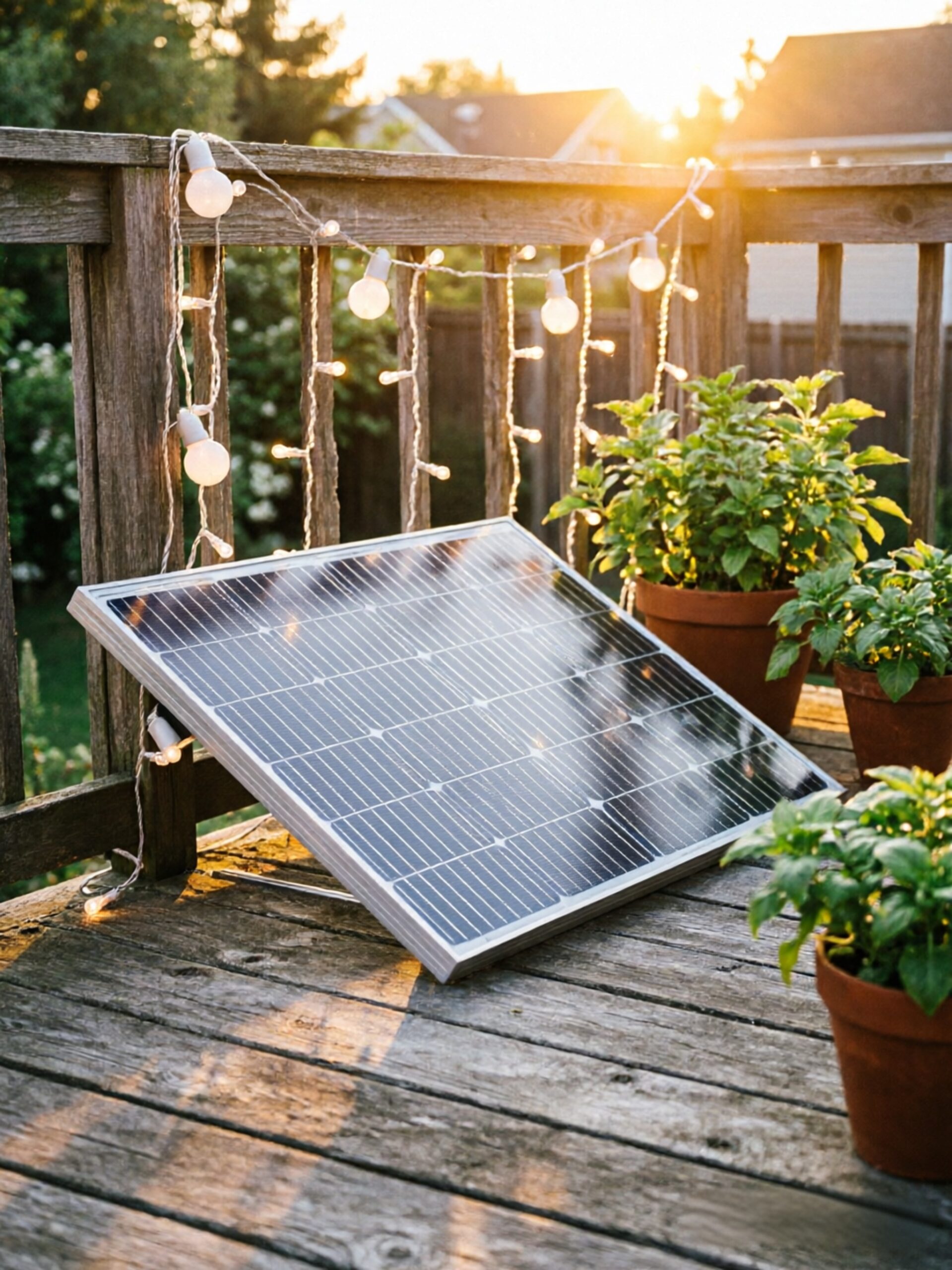
TL;DR: Wattage is a panel’s maximum output in perfect sunlight; in real conditions expect about 70-80% of the rating. Choose by what you’ll power: 50-100W for phones and small devices, 200-300W for laptops and mini fridges, 400-600W for home rooftop systems. For basic outage backup, a 300-500W setup covers essentials — and start small, since you can expand later.
If you’ve ever browsed solar panels online, you’ve probably noticed wattage listed front and center on every product. Most people see this number without fully understanding what it means, or how to pick the right wattage for their daily use. If you’re confused about how much power you actually need from a solar panel, this simple guide will clear things up.
Let’s break down everything you need to know in plain terms.
What Is Wattage?
Wattage, measured in watts (W), refers to the maximum power output a solar panel can produce under perfect, ideal sunlight conditions. To give you a clear example, a panel rated at 100W can generate 100 watts of electricity every hour when placed in direct, unobstructed sunlight.
That said, real outdoor conditions are never flawless. Cloud cover, overhead shadows, and shifting sun angles all lower actual output. As a general everyday rule, you can expect your panel to produce around 70 to 80 percent of its listed wattage in regular daylight.
Common Solar Panel Wattages and Their Uses
50W – 100W Panels
These smaller panels work perfectly for basic, low-power devices. They can easily charge phones, tablets, LED lighting, and compact fans. Their lightweight and portable design makes them ideal for outdoor activities like camping and hiking, as well as casual daily use on home balconies.
200W – 300W Panels
Stepping up in power, this range supports larger everyday electronics. They can run laptops, mini refrigerators, small televisions, and lightweight power tools. This is one of the most versatile options, commonly used for RV power systems and basic home backup setups.
400W – 600W Panels
High-wattage panels in this bracket handle multiple high-consumption appliances at once. They can support washing machines, standard power tools, and full-sized refrigerators. Home rooftop solar systems and off-grid cabin setups often rely on panels within this range for stable, long-term power supply.
How to Pick the Right Panel Size
Your ideal solar panel wattage entirely depends on the devices you plan to power. This quick reference covers common daily electronics to help you estimate your needs:
- Phone charging: 5-10W over 2-3 hours
- Laptop operation: 60W over 6-8 hours
- Mini fridge running: 80W for full 24-hour use
- TV viewing: 100W over 4-5 hours
For simple home backup during unexpected power outages, a 300W to 500W solar setup is usually enough to keep all your essential devices running smoothly.
Why Higher Wattage Isn’t Always Better
It’s easy to assume bigger panels are always the best choice, but that’s not always the case. While high-wattage panels generate more power, they also come with a higher price tag and take up far more installation space.
For the average user, starting with a 100W or 200W panel is the most practical and cost-effective solution. You can always expand your system and add extra panels later if your power needs increase over time.
Conclusion
Learning to understand solar panel wattage takes the guesswork out of shopping and helps you avoid buying equipment that’s either too weak or unnecessarily powerful. Start by listing out all the devices you want to run, calculate their total power draw, and select a panel that matches that requirement. If you’re still unsure, choosing a slightly higher wattage than your exact needs is always a safe bet.
FAQ
What does wattage mean on a solar panel?
Wattage is the panel’s maximum power output under perfect sunlight. In real conditions, expect roughly 70-80% of the rated figure due to clouds, shade, and sun angle.
How many watts do I need for my devices?
Phones need 5-10W, laptops about 60W, mini fridges around 80W, and TVs about 100W. Add up what you’ll run at once, then choose a panel with a little headroom.
Is a higher wattage panel always better?
No. Higher wattage costs more and needs more space. For most users, a 100-200W panel is the practical start, and you can expand later.
What size solar panel do I need for home backup?
A 300-500W setup is usually enough to keep essential devices running during an outage.
Can I add more panels later?
Yes. Most systems support expansion, so starting smaller and adding panels as your needs grow is a smart approach.