TL;DR: A gentle hum or buzz from a solar inverter is normal – it comes from switching electronics and the magnetic components inside, and it changes with load. What is not normal is loud rattling, a grinding or screeching sound, a fan that never stops, or a noise that appeared suddenly after months of quiet. Each of those points at a specific part, and this guide covers which is which.
Inverters are not silent appliances. Almost every home system makes some noise, and the question is only whether the noise is the electronics working or a part on its way out.
Where the Noise Comes From
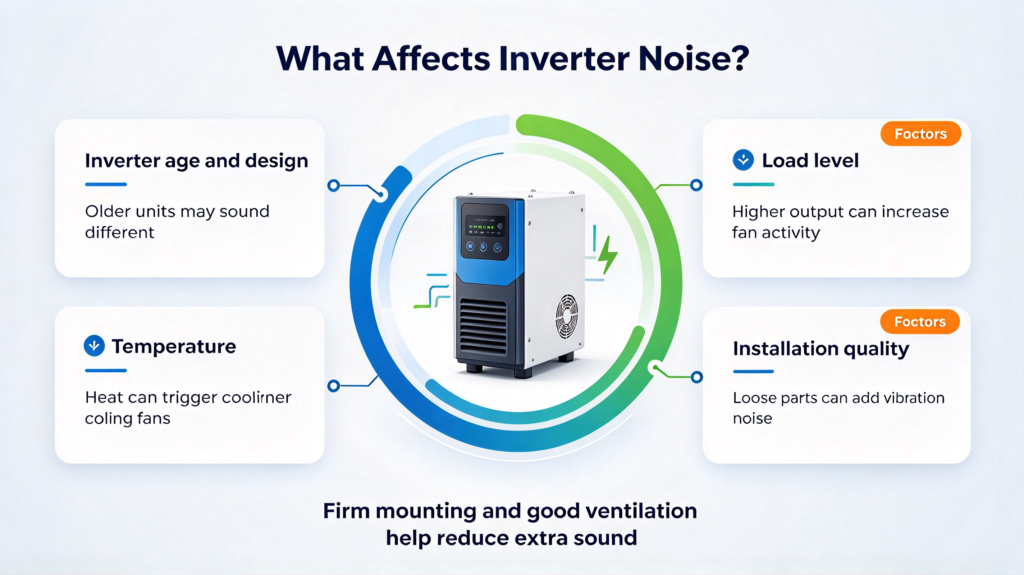
- Switching electronics. An inverter converts DC to AC by switching transistors thousands of times a second. That switching produces a low, steady hum at a frequency you can sometimes hear.
- Inductors and transformers. Magnetic components physically vibrate as current passes through them. This is the main source of the familiar buzz, and it is louder when the inverter is working harder.
- Cooling fans. Most string inverters have at least one fan. A healthy fan is audible but even, and it should not run constantly in cool weather.
- The mounting surface. A poorly fastened inverter can turn a normal hum into an amplified rattle through drywall or a hollow wall.
The Four Sounds and What They Mean
1. A Low, Steady Hum or Buzz – Normal
A quiet hum that varies with how much power the system is producing is the inverter doing its job. It is usually loudest around midday and quiet at dawn and dusk, and it often fades into the background completely once you stop listening for it.
2. A Fan Cycling On and Off – Normal
An inverter fan that runs during the middle of the day and stops in the evening is behaving correctly. Fans should respond to temperature, not run continuously.
3. Rattling or Vibration Through the Wall – Mounting Problem
If the noise sounds like something loose rather than electrical, the inverter is probably transferring vibration into the structure. This is a mounting and clearances issue, not an internal fault, and it is usually the easiest to fix.
4. Grinding, Screeching or a Buzz That Gets Louder – Something Is Failing
These are the ones to act on:
- Grinding or screeching almost always means a fan bearing.
- A buzz that has grown steadily louder over months points to aging capacitors or inductors.
- A new clicking or arcing sound, especially with a burning smell, means stop using the system and call your installer.
- A noise that started the same day an error code appeared – check the code first. Inverter error codes usually tell you more than the sound does.
Why It Is Louder at Certain Times
- Midday in summer. Highest load and highest ambient temperature at the same time – the inverter is working hardest exactly when cooling is least effective.
- First thing in the morning. Some inverters make a brief buzz or click as they wake up and connect to the grid. That is normal.
- Cold mornings. Component vibration can be slightly louder at low temperatures before everything warms up.
- Right after a firmware update. Some models briefly run fans at full speed. It settles within a day.
Why It Got Louder After Adding a Battery
A hybrid inverter managing a battery is doing more work than one that only converts solar: charging, discharging, and switching between modes. That means more load on the electronics at more times of day, including the evening, which is when many owners first notice the noise.
If the noise is a steady hum and the system is working, this is expected behaviour rather than a fault. If it also comes with derating, error codes, or a fall in output, the inverter may be undersized for what it is now being asked to do – inverter sizing covers how that is calculated.
Is Inverter Noise a Health or Safety Issue?
The sound level of a residential inverter is comparable to a refrigerator – generally in the 30-50 decibel range at close distance, which is well below anything considered harmful.
Two practical points:
- Do not mount an inverter on the other side of a bedroom wall. The hum is not dangerous, but it is annoying at night, and vibration transfers through studs more than people expect.
- Treat any noise with a burning smell as an emergency. That combination is not a noise problem, it is an electrical one.
Five Things That Make It Quieter
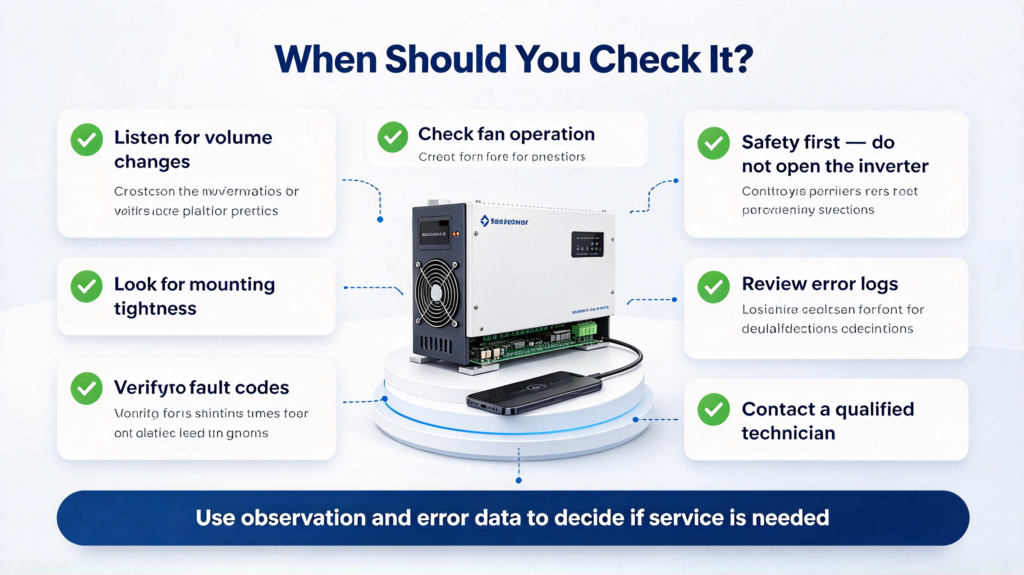
- Check the mounting fasteners. Loose bolts are the most common cause of amplified noise, and tightening them is free.
- Confirm the wall clearances in the manual. Insufficient clearance makes the fan work harder and the enclosure hotter. Inverter lifespan depends heavily on this.
- Vacuum the vents once a year with the unit switched off. Dust on a fan grill is the second most common cause of extra noise, and it shortens the fan’s life.
- Do not box the inverter in. Cabinets and tight closets trap heat and make everything louder.
- Add anti-vibration pads between the bracket and the wall if the noise is transferring into the structure. A cheap fix that usually works.
When to Call the Installer
- Grinding, screeching or metal-on-metal sounds
- A noise that started suddenly after months of normal operation
- Any noise with a burning smell, smoke, or a visible scorch mark
- Noise combined with a drop in production, a fault code, or the inverter turning itself off
- A fan that runs continuously for days in cool weather
If the inverter is already past its tenth year, noise plus any of the above is a reasonable moment to have it assessed. Inverter replacement cost covers what that decision usually involves.
FAQ
Is it normal for a solar inverter to hum?
Yes. A low, steady hum that varies with how much power the system is making is completely normal and comes from the switching electronics and magnetic components inside.
Why is my solar inverter so loud all of a sudden?
A sudden change is the key signal. It usually means a failing fan bearing, dust blocking the airflow, or a loosened mounting bolt. Check for an error code first, then the fan and the fasteners.
Should my solar inverter fan run all the time?
No. A healthy fan responds to temperature and load, so it should run during the day and stop in the evening. A fan running continuously in cool weather points to a clogged vent or a failing temperature sensor.
Can I make my solar inverter quieter?
Usually yes. Tighten the mounting bolts, verify the wall clearances in the manual, clear dust from the vents, keep it out of enclosed cabinets, and add anti-vibration pads between the bracket and the wall.
Is inverter noise dangerous?
The noise itself is not – it is roughly fridge-level. The exception is any noise accompanied by a burning smell, smoke or scorch marks, which is an electrical fault rather than a noise issue and needs the system switched off.