TL;DR: Solar battery maintenance is light for lithium-ion systems — keep them cool, dry and well ventilated, and watch the state of health in the app. Lead-acid batteries need more work: water top-ups on flooded models, clean terminals and equalization charging. Either way, monitoring performance trends is the best early warning of failure.
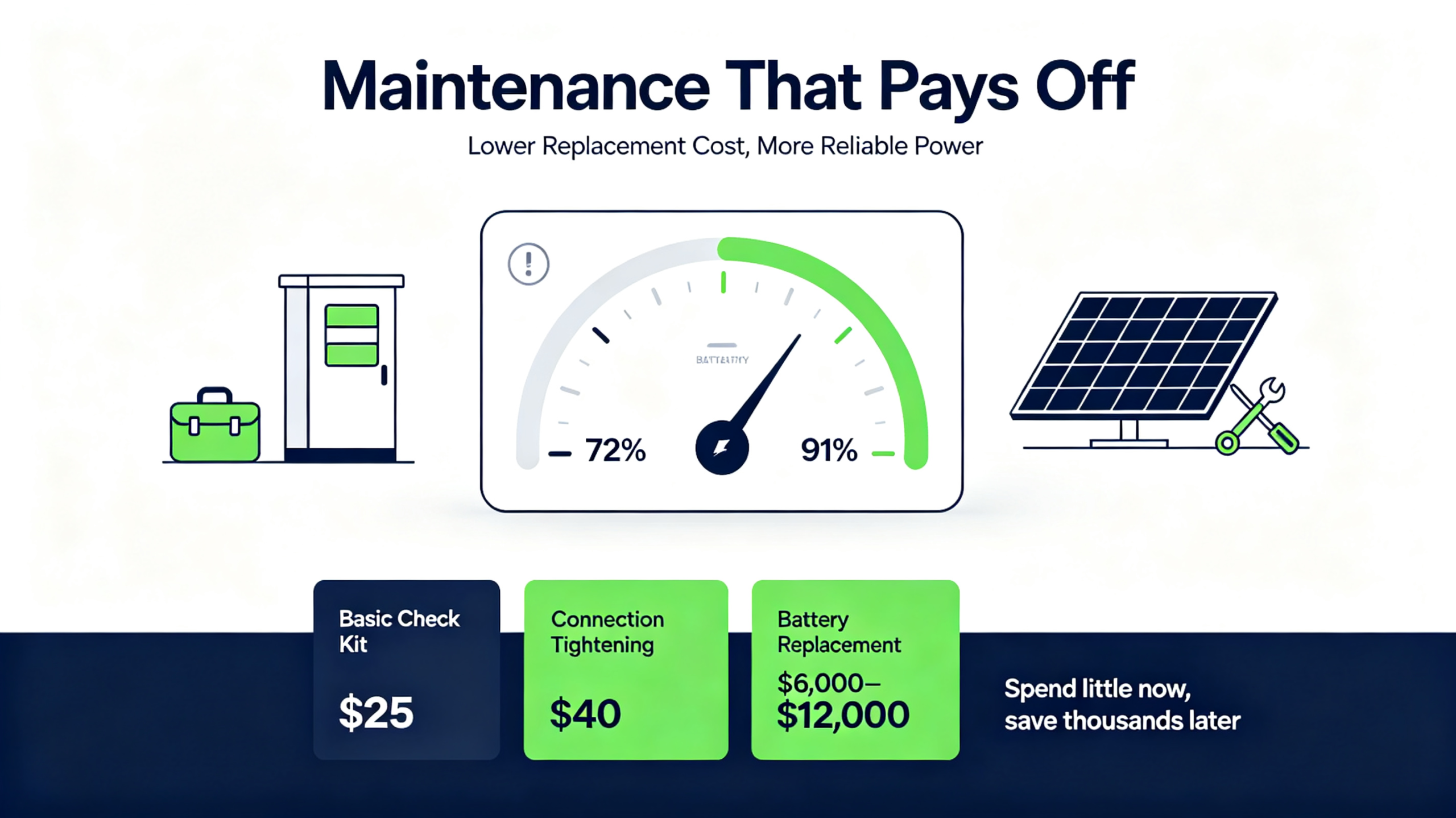
A solar battery is one of the most expensive parts of a home energy system — and one of the few that will need replacing during the life of your panels. A little maintenance goes a long way toward getting the full 10-15 years out of it. Here’s what actually matters.
Maintenance by Battery Type
What you need to do depends almost entirely on the chemistry you have.
Lithium-Ion (Most Modern Systems)
Lithium batteries are designed to be maintenance-free in the traditional sense. There’s no water to add and no terminals to service. What they need is the right environment and monitoring:
- Keep them cool: Avoid garages or sheds that bake in summer; heat is the biggest lifespan killer
- Keep them dry: Moisture causes corrosion in connections and electronics
- Ensure ventilation: Units need airflow, not sealed enclosures
- Install software updates: Manufacturers improve charging behaviour through firmware
- Watch the state of health: Most apps report capacity fade over time
Lead-Acid (Older or Budget Systems)
Lead-acid batteries need real attention:
- Flooded types: Check electrolyte levels monthly and top up with distilled water only
- Clean terminals: Remove corrosion and keep connections tight
- Equalization charging: Periodic higher-voltage charging balances the cells
- Ventilation: They release hydrogen while charging — never enclose them
- Avoid deep discharge: Repeatedly draining them shortens life dramatically
The Habits That Matter Most
- Check the app monthly: Look at backup time and capacity, not just the percentage
- Compare month to month: Gradual decline is normal; sudden drops are not
- Keep the area clean and dry: Dust and moisture are the two quiet killers
- Don’t push the limits: Let the system manage discharge depth rather than forcing it
- Book an annual inspection: A technician can check connections, torque and firmware
Warning Signs of a Failing Battery
- Backup time noticeably shorter than a year ago
- Frequent error codes or inverter warnings
- Swelling, unusual heat, or a chemical smell
- Capacity readings that jump around unexpectedly
- The system stops covering loads it used to handle easily
If you notice any of these, contact your installer while the system is still under warranty.
What About Warranty?
Most home batteries carry a 10-year warranty that guarantees either a minimum capacity or a number of charge cycles. Keep your monitoring data — it’s the evidence used in warranty claims. Without performance records, proving a problem is much harder.
Conclusion
Solar battery maintenance is simple if you know what type you own. Lithium systems mostly need a cool, dry location and regular monitoring; lead-acid systems also need water checks, clean terminals and equalization. Monitor your data, act on sudden changes, and your battery should comfortably reach its rated lifespan.
FAQ
Do solar batteries need maintenance?
Lithium batteries need very little — mainly a cool, dry, ventilated location and periodic monitoring. Lead-acid batteries require water checks, terminal cleaning and equalization charging.
How long do solar batteries last?
Lithium-ion batteries typically last 10-15 years. Lead-acid batteries usually last 5-8 years, depending on how deeply they’re discharged.
How do I know if my solar battery is failing?
Shorter backup time than before, frequent error codes, swelling, unusual heat, or erratic capacity readings. Contact your installer while the warranty is active.
Does temperature affect battery life?
Yes. High temperatures are the biggest cause of premature battery aging. Shade, ventilation and a stable location significantly extend lifespan.
Can I maintain my solar battery myself?
Lithium batteries: yes, just monitoring and keeping the area clean and cool. Lead-acid: basic checks are DIY-friendly, but electrical work and inspections are best left to a professional.
Related: Solar Energy Storage – Batteries, Pricing, and What You Really Need
1 thought on “Solar Battery Maintenance – How to Make Yours Last Longer”