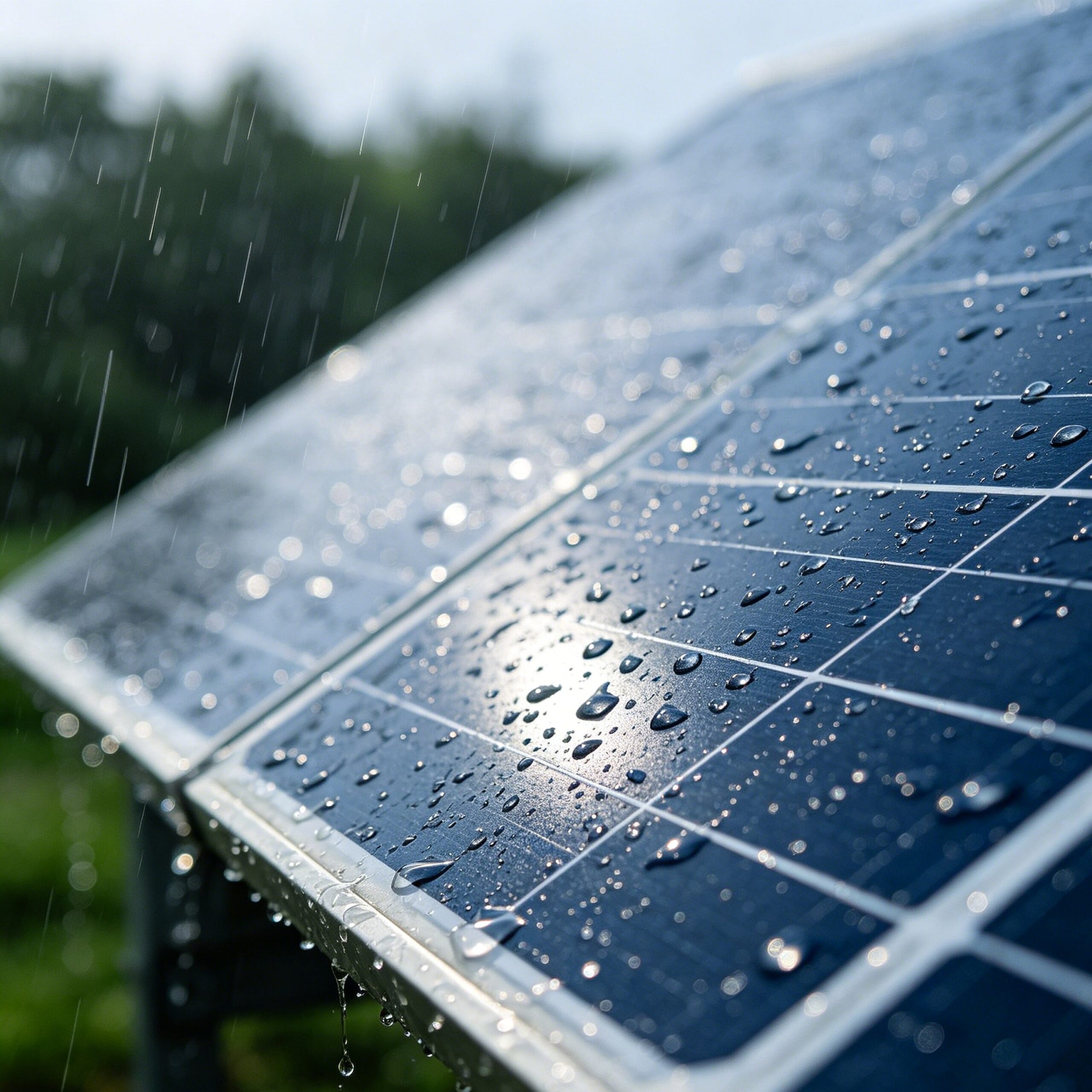
TL;DR: Solar panels still work on cloudy days, but output drops to 10-25% of rated power under thick clouds and 50-80% under thin cloud. To get more from weak sunlight, add extra panels, use an MPPT charge controller, keep the glass clean, and consider battery storage.
Solar panels still keep generating electricity on cloudy days, though their output drops significantly. Below we cover real-world performance numbers and practical tips to get the most out of weak sunlight.
How Much Power Can You Expect on Cloudy Days?
When thick heavy clouds cover the sky, panels only hit roughly 10-25% of their full rated capacity. Under thin, scattered cloud cover, that figure climbs to somewhere between 50% and 80%.
To put it in perspective, a 400-watt panel might only churn out 40-100 watts when clouds hang thick overhead.
Why Solar Panels Still Work When It Is Cloudy
Solar systems run on visible light rather than direct heat from the sun. Light still filters through cloud layers, so panels can harvest at least some energy even on dull, grey days.
One interesting quirk worth noting: panels sometimes get a short-lived power boost the moment clouds drift away and bright sunlight suddenly breaks through. This is known as the edge-of-cloud effect.
Does Solar Make Sense for Consistently Cloudy Regions?
Absolutely. Nations such as Germany and the United Kingdom see plenty of overcast weather, yet they rank among global solar leaders. They compensate for lower daily production by installing larger panel arrays and staying connected to the utility grid.
If you live in an area with frequent cloud cover, you will simply need a bigger-sized system or battery storage to match your household energy demands.
Tips to Boost Performance Under Cloudy Skies
- Install extra solar panels. A larger overall array will deliver more total energy, even when clouds block much of the sunlight.
- Choose an MPPT charge controller. MPPT controllers pull far more usable power out of low-light conditions compared to older PWM models.
- Keep panel surfaces clean. Dust and grime block what little sunlight makes it through cloud cover. Regular cleaning helps preserve every bit of available light.
- Set a steeper tilt angle for winter. The sun sits lower in the sky during cloudy winter months. A sharper tilt helps panels catch as much incoming light as possible.
- Add battery storage. Batteries hold onto every watt your panels manage to produce. Stored power becomes especially valuable during stretches of dim, gloomy weather.
Realistic Expectations to Keep in Mind
Do not expect your solar setup to fully cover all your consumption on heavily cloudy days; this is completely normal. Most solar homeowners rely on grid power through overcast spells and nighttime hours, while surplus power generated on bright sunny days balances those draws.
Final Thoughts
Solar panels definitely work on cloudy days, just with reduced output. With a properly sized array, battery backup, and basic routine maintenance, solar can still deliver solid value even in places that see lots of cloud cover.
FAQ
How much power do solar panels produce on cloudy days?
Under thick, heavy clouds, output drops to roughly 10-25% of rated capacity. With thin or scattered cloud cover, panels can still reach 50-80% of their normal output.
Do solar panels work in winter or at night?
Panels need light, so they produce nothing at night. In winter, shorter days and lower sun reduce output, but panels still work — they actually run more efficiently in cold weather.
Why do my panels sometimes produce a quick power spike?
That’s the edge-of-cloud effect. When bright sunlight suddenly breaks through after clouds pass, panels can briefly produce a boost of extra power.
Is solar worth it in cloudy regions?
Yes. Countries like Germany and the UK have heavy cloud cover yet lead the world in solar. They install larger arrays and stay connected to the grid to make up for lower daily output.
How can I get more power from my panels on cloudy days?
Add more panels, use an MPPT charge controller, keep the panel surfaces clean, set a steeper tilt for winter, and add battery storage to save whatever power you do generate.
Will my solar system cover all my power needs on cloudy days?
Not usually — and that’s normal. Most solar homes rely on the grid during overcast spells and at night, using surplus power from sunny days to balance those draws.
Related: Solar Panels and Shade – How Much Shading Is Too Much