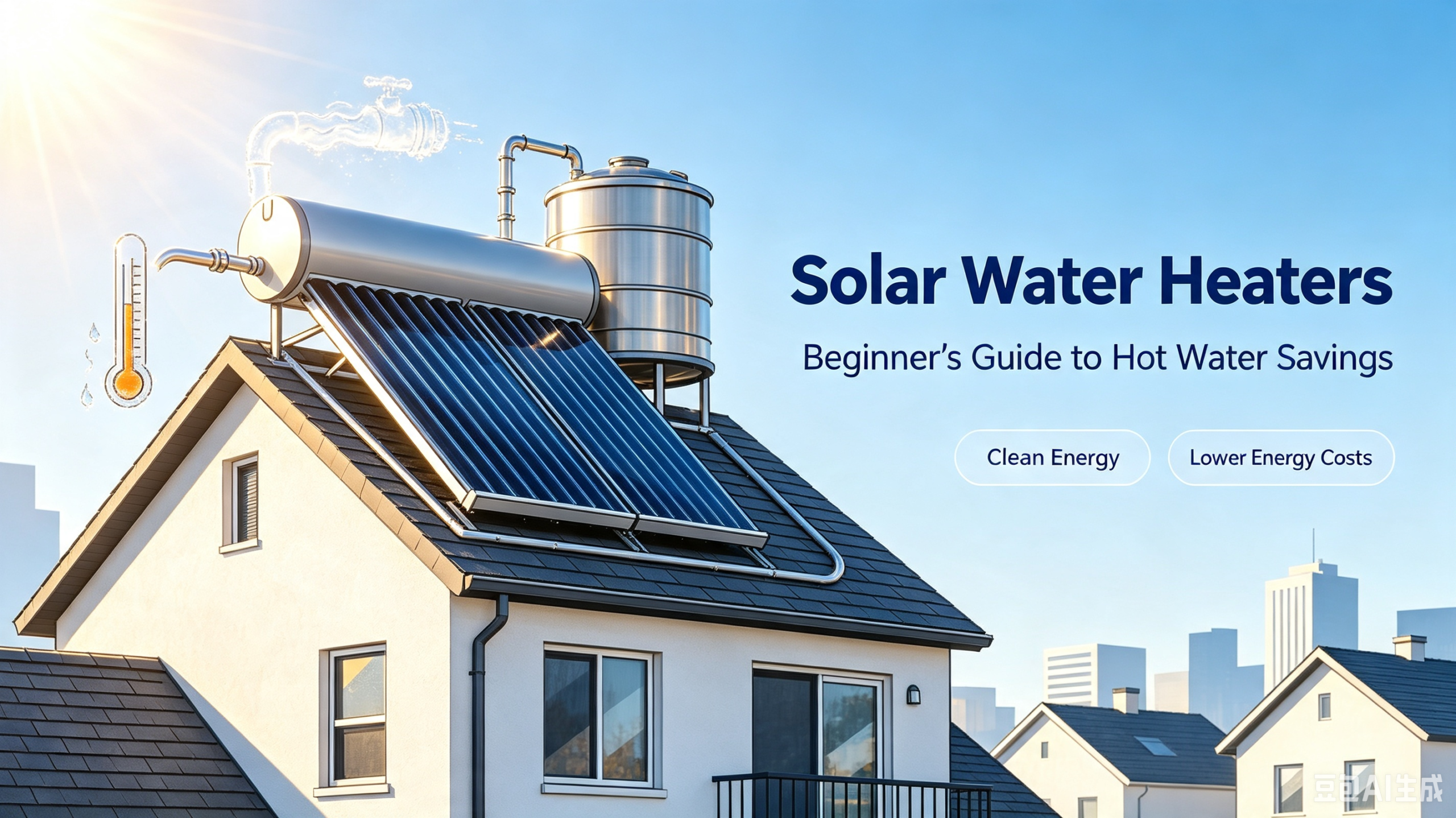
TL;DR: Solar water heaters capture sunlight to heat household water directly and can cut water-heating energy costs by 50-80%. Two main types: cheaper flat plate collectors and more efficient evacuated tubes that work well in cooler, cloudier areas. An installed system runs about $3,500-$7,500, pays back in 5-8 years, and lasts 20+ years with almost no maintenance.
Heating water makes up a large share of household energy spending for most families, and solar water heaters can bring those monthly costs down by a wide margin. Let’s break down the basics for anyone considering this upgrade.
What Is a Solar Water Heater?
A solar water heater captures sunlight to heat water for household use. Unlike standard solar panels that produce electricity, these units heat water directly via panels fitted onto your roof.
Many people consider this one of the most budget-friendly ways to take advantage of solar power, particularly in locations with plenty of sunshine.
How Does It Work?
Two main designs dominate solar hot water systems.
Flat Plate Collectors
Flat plate collectors are dark panels installed on the roof. Water or heat transfer liquid circulates through pipes inside the panel. Sunlight heats the panel surface, which warms the fluid, and that heat is then transferred to your domestic water supply.
Evacuated Tube Collectors
Evacuated tube systems rely on parallel rows of glass tubes. Every tube features vacuum insulation, allowing it to capture heat efficiently even when temperatures are low or the sky is overcast. These systems deliver better performance, though they come with a higher price tag.
Whichever style you choose, the setup links to a storage tank, keeping heated water ready for use whenever you turn on the tap.
What Are the Benefits?
- Lower energy bills: Heating water often consumes 15-25% of all energy used at home. Solar systems can slash this expense by 50% to 80%.
- Minimal upkeep: Solar water heaters have almost no moving components and can operate reliably for more than 20 years.
- Adaptable to different climates: Evacuated tube models perform well even in cooler areas.
- Smaller carbon output: Less reliance on electricity or gas means fewer greenhouse gas emissions.
What Are the Costs?
Fully installed solar water heaters range from $3,500 to $7,500. The final price depends on system size and collector type. In many regions, government incentives help bring the upfront cost down.
For most households, savings on energy bills cover the initial investment within 5 to 8 years. Once that period passes, your hot water comes with almost no ongoing running costs.
Is It Right for You?
Solar water heaters are a great fit if:
- Your roof receives consistent sunlight
- Your household uses large volumes of hot water
- Your existing water heater is ageing and needs replacing
They are not such a practical choice if you live somewhere with persistent cloud cover or have very limited roof space.
If your roof gets plenty of sunlight and your household regularly uses hot water, a solar water heater is a low-maintenance option to cut energy costs. For many homeowners, it turns out to be one of the most sensible solar upgrades available.
FAQ
How does a solar water heater differ from solar panels?
Solar panels generate electricity, while a solar water heater captures sunlight to heat household water directly.
Which type of solar water heater is best?
Flat plate collectors are cheaper and suit sunny areas. Evacuated tube systems cost more but perform better in cold or overcast climates.
How much money can a solar water heater save?
Water heating is 15-25% of home energy use, and solar systems can cut that portion by 50-80%.
How much does a solar water heater cost?
An installed system typically runs $3,500-$7,500, with incentives helping in many regions. Most homes recover the cost in 5-8 years.
How long do solar water heaters last?
They have almost no moving parts and can operate reliably for more than 20 years with minimal upkeep.
Is a solar water heater right for my home?
Yes, if your roof gets good sunlight and you use plenty of hot water. It’s less practical in persistently cloudy areas or with very limited roof space.
Related: Solar Panel Efficiency Ratings – What Do They Really Mean