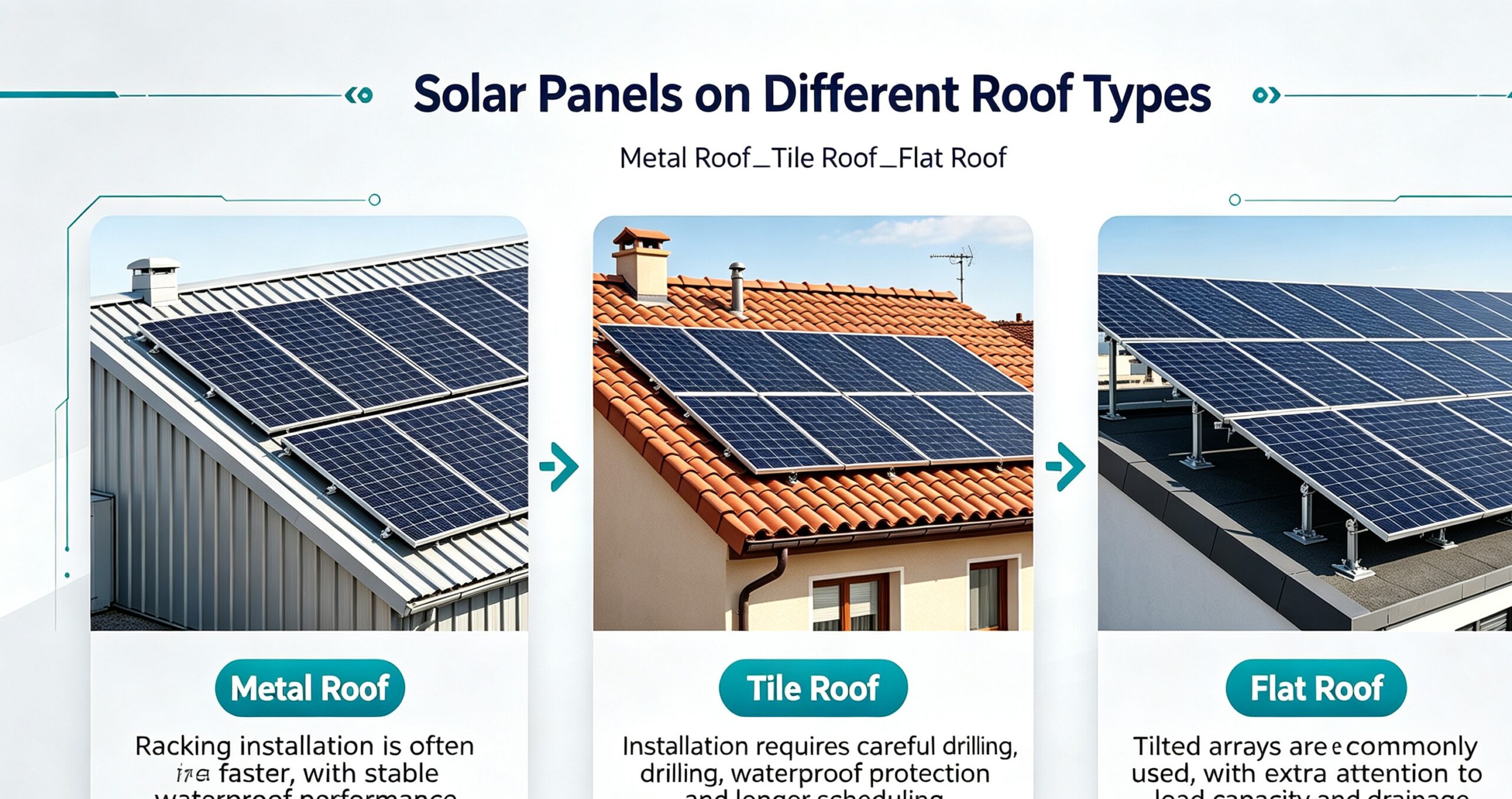
TL;DR: Solar panels on different roof types work well, but mounting differs: standing-seam metal is easiest (no drilling), asphalt shingles are standard, tile is more fragile and costlier, and flat roofs need tilt racks or ballast. Older or damaged roofs should be repaired before going solar.
One of the most common questions homeowners ask is whether solar panels will work on their roof. The good news is that solar can be installed on almost any roof type — metal, tile, flat, or shingle. The differences come down to mounting method, cost, and how careful the installer has to be.
Asphalt Shingle Roofs
Asphalt shingles are the most common roofing material in North America, so most installers are very experienced with them. Panels mount on brackets that bolt through the shingles with waterproof flashing around every penetration.
Best for: Most homes. Low cost, widely understood, and easy to repair if needed.
Standing-Seam Metal Roofs
Standing-seam metal is actually one of the best roofs for solar. Panels attach with clamps that grip the seams, so installers don’t need to drill a single hole in your roof. That means no leak risk and fast, clean installation.
Best for: Homes with a standing-seam metal roof in good condition.
Corrugated and Trapezoidal Metal Roofs
These metal profiles need special brackets that attach to the roof with screws and sealant. The work is more involved than standing seam, but still reliable when done by an experienced installer.
Clay and Concrete Tile Roofs
Tile roofs look beautiful, but they are fragile. Installers must carefully lift or remove tiles, fit mounting hooks to the structure underneath, and replace the tiles around each bracket. Broken tiles and higher labor costs make tile roofs one of the more expensive options for solar.
Watch out for: Tiles that are old or brittle — they can crack during installation.
Flat and Low-Slope Roofs
Flat roofs need panels tilted up toward the sun on racks. These racks are either weighted down with ballast or anchored into the roof with careful waterproofing. Flat roofs are common on commercial buildings and modern homes, and they give installers a lot of freedom to aim panels in the ideal direction.
Key point: Waterproofing is critical on flat roofs, so choose an installer with solid experience.
Roof Age and Condition Matter Most
Whatever your roof type, its condition matters more than the material. Panels are designed to last 25-30 years, so installing them on a roof that needs replacement in five years means paying to remove and reinstall the array later. If your roof is old, consider replacing it first.
Which Roof Type Costs More to Install?
Cost varies mainly by labor. Standing-seam metal and composite shingle roofs are the least expensive to work with. Tile and some metal profiles add labor and materials, while flat roofs can go either way depending on the mounting system required.
FAQ
Can solar panels be installed on a metal roof?
Yes. Standing-seam metal roofs are among the best for solar because panels clamp onto the seams without drilling. Corrugated metal needs brackets but still works well.
Are solar panels safe on tile roofs?
Yes, when installed by an experienced crew. Tiles are fragile, so the installer must handle them carefully, which usually adds to the cost.
Do flat roofs work for solar panels?
Yes. Panels are mounted on tilted racks or weighted with ballast, and the flat surface makes it easy to aim them at the sun.
Should I replace my roof before installing solar?
If your roof is near the end of its life, yes. Panels last 25-30 years, so you want a roof that will last just as long underneath them.
Can solar damage my roof?
Not if installed properly with quality flashing and seals. Poor installation is the real risk, so choose a certified installer with roof experience.
Related: Solar Panels vs Solar Tiles – Which Roof Option Is Better