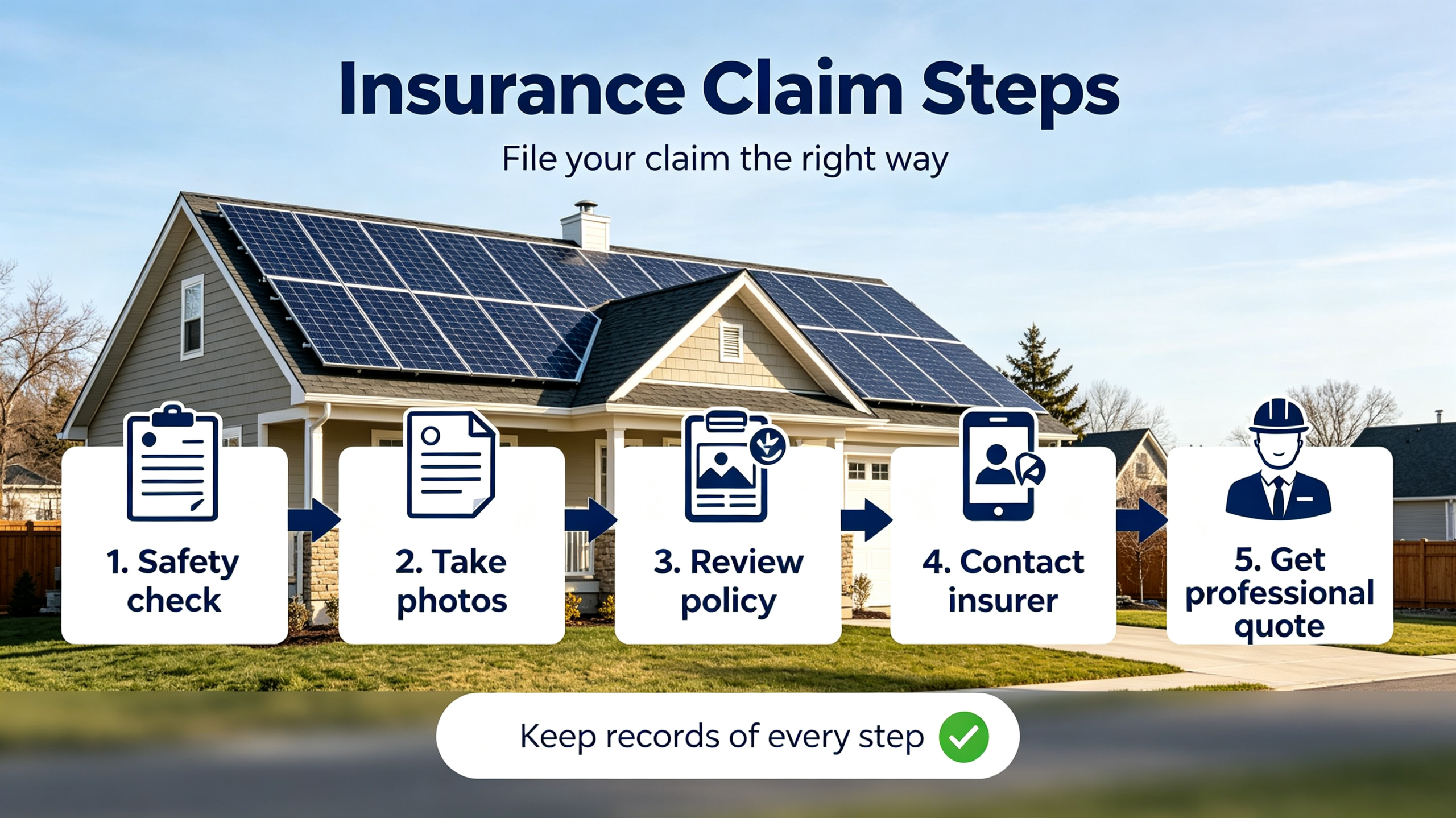
TL;DR: Solar panel hail damage is real, and it is usually invisible from the ground. Most panels are tested against a one-inch ice ball at around 50 mph, so bigger stones or faster winds can crack glass and cause micro cracks that quietly cut output. A single panel swap runs $200 to $600 installed, and an inspection costs $150 to $400. Manufacturer warranties cover defects, not storms, so the claim normally goes through your homeowner’s policy.
After a hail storm, the first thing homeowners do is look at the roof from the driveway. The second thing they do is assume that if the glass looks fine, the panels are fine. Both instincts are unreliable, because the damage that matters most is often not visible from ground level.
Here is how to tell whether your array took a hit, what repairs actually cost, and where the money comes from.
Can Hail Really Damage Solar Panels?
Yes, and more easily than most owners expect. Panels are built to survive weather, but the protection has limits.
The standard industry hail test fires a one-inch ice ball at the panel at roughly 50 mph. Passing that test is what earns the rating printed on the spec sheet. A hailstorm producing stones larger than an inch, or firing them at higher speed, is outside the test conditions.
What happens next depends on the hit. A glancing strike may leave a small pit in the glass. A direct strike can shatter a cell, crack the glass, or create micro cracks that are invisible to the eye but interrupt the current path inside the panel.
How to Spot Solar Panel Hail Damage
Walk the array slowly on a bright day, and look for these signs:
- Cracked or shattered glass on any panel surface, including small star-shaped cracks near the frame
- Pitted or frosted spots where the glass surface has been chipped
- Snail trails, the thin dark lines that appear when moisture gets into a micro crack and oxidises
- Discoloured or browned cells, which usually point to internal damage
- A drop in production on your monitoring app compared with the same period last year
The last item on that list is the one most owners miss. Micro cracks do not usually kill a panel outright; they reduce its output gradually. Checking your monitoring history against the previous year is the fastest way to spot a problem the eye cannot see. Our guide to solar panel monitoring explains how to read those numbers.
What Repairs Cost
Costs split into two parts: the solar work and any roof damage underneath it.
| Work | Typical cost |
|---|---|
| Professional inspection and diagnostic report | $150-$400 |
| Single panel replacement, installed | $200-$600 |
| Replacement of several panels | $250-$600 per panel |
| Roof repair under the array | Quoted separately |
If the whole array is written off, expect a quote close to the cost of installing a new system of the same size, minus the inverter and wiring that can be reused. Most contractors price this per panel rather than as a package.
One practical warning: replacing a panel with a different model or wattage can affect the performance of the whole string. Ask the installer to match the original specification where possible, or to explain what happens if they cannot.
Does Insurance Cover Solar Panel Hail Damage?
In most cases yes, through the dwelling coverage on your homeowner’s policy, because rooftop solar is treated as part of the structure. But three details decide whether you actually collect.
The deductible. Many policies apply a separate percentage deductible for wind and hail rather than the flat dollar figure you remember from your paperwork. A 1% to 2% deductible on a $400,000 home is $4,000 to $8,000 out of pocket before insurance pays anything. That single detail decides whether a claim is worth filing.
Documentation. Insurers want evidence that the damage happened during the covered event and that it affected performance. That means photos taken immediately after the storm, plus a written inspection report or performance data showing the output drop.
Timing. Storm claims have filing windows, and they vary by state and policy. Waiting until you notice a production problem months later makes the claim much harder to support.
For background on how solar equipment is treated under a standard policy, see our article on solar panel insurance.
What the Manufacturer Warranty Covers (and Does Not)
This is the most common misunderstanding in the whole conversation. Panel warranties are written to cover manufacturing defects and long-term power output, not weather events.
Hail is normally listed as an exclusion. So a 25-year performance warranty does not mean the manufacturer replaces panels broken by a storm. That claim goes to your insurance company instead. The distinction matters because owners often waste weeks chasing the wrong party. Our guide to solar panel warranties sets out what is normally covered.
What to Do After a Hail Storm
- Photograph the array and the roof from several angles, including close-ups, before anything is cleaned up
- Check your monitoring app against the same period last year for any unexplained drop
- Get a professional inspection rather than relying on a ground-level look
- Ask for the inspection in writing, with panel-by-panel findings and performance data
- Contact your insurer early and ask specifically about your wind and hail deductible
- Do not let a roofing crew remove panels unless they are certified for your equipment brand
Can You Reduce the Risk?
Some of it is out of your hands, but not all of it. Panels with thicker tempered glass and higher impact ratings hold up better. Keeping part of the array on a lower roof section or a ground mount reduces exposure. And keeping your monitoring history intact means you will notice a slow decline long before an annual inspection would catch it.
FAQ
How big does hail have to be to damage solar panels?
Damage becomes likely once stones exceed roughly one inch, which is the size used in the standard industry impact test. Smaller stones can still cause micro cracks at high speed, and older panels are more vulnerable than new ones.
Will I notice immediately if a panel is damaged?
Not always. Cracked glass is obvious, but micro cracks often cause a gradual output loss rather than an outage. Comparing this year’s production with last year’s is the reliable check.
Does my panel warranty cover hail?
Usually not. Manufacturer warranties cover defects and power output, and most list storm damage as an exclusion. Hail claims normally go through your homeowner’s insurance instead.
Should I replace one panel or the whole array?
Replace only what is damaged, as long as the replacement matches the original specification closely. A mismatched panel can drag down the output of the whole string, so ask the installer to confirm compatibility.
Does a cracked panel still work?
It often does, at reduced output, which is why damage can go unnoticed for months. Water ingress through the crack eventually causes corrosion and a permanent failure, so a cracked panel should be replaced rather than left in service.
Related: Solar Panel Insurance – Do You Need It and What Does It Cover
2 thoughts on “Solar Panel Hail Damage – Insurance Claims, Repairs, and Costs”