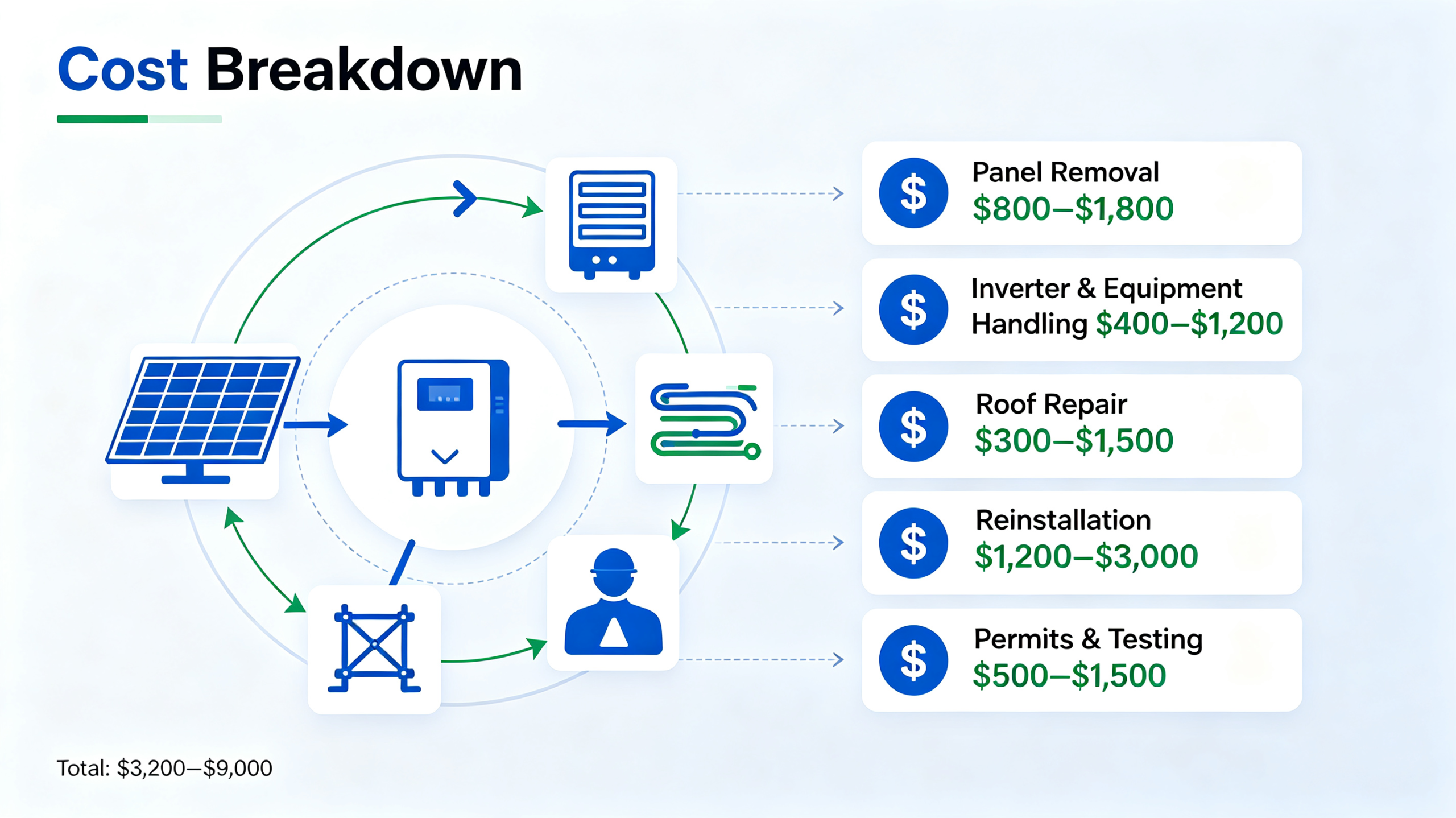
TL;DR: Solar detach and reset cost typically runs $50 to $150 per panel, or roughly $1,500 to $3,000 for a typical 20 to 30 panel home system. That covers removal, storage and reinstallation on the new roof, plus new flashing. Permits and re-inspection usually add $150 to $500. If the roof work is part of a storm damage insurance claim, ask your adjuster in writing whether the detach and reset invoice is included.
Replacing a roof on a home that already has solar panels is one of those jobs nobody thinks about until it is in front of them. The roofers cannot work around the array, and the solar panels cannot stay on a roof that is being torn off. So the system has to come down, be stored, and go back up on the finished roof.
Here is what that work costs, who is normally expected to pay for it, and the one mistake that can quietly void your panel warranty.
What Detach and Reset Actually Means
“Detach and reset” is the term contractors use for the whole cycle: disconnecting the array, removing the panels and racking, storing them, installing the new roof or repairing the old one, then reinstalling and recommissioning the system.
It is not just unbolting panels. The electrical side has to be handled properly, the mounting hardware has to go back in the right places with new seals, and the system needs testing before it is switched back on. A crew that skips those steps creates leaks and faults that show up months later.
Solar Detach and Reset Cost in 2026
Pricing depends mainly on how many panels you have and how complex the mounting is. These ranges cover most residential jobs:
| System size | Panels | Typical detach and reset cost |
|---|---|---|
| Small | 10-15 | $700-$1,500 |
| Typical | 20-30 | $1,500-$3,000 |
| Large | 35-50 | $3,000-$5,500 |
On top of that, budget for these extras:
- Permit and re-inspection: $150-$500
- New flashing or replacement racking: $500-$1,500
- Broken panel replacement, if anything cracks during removal: $200-$500 per panel
Many installers also charge a minimum call-out fee of $400 to $600, which matters on very small arrays where the hourly work is short but the trip and paperwork are not.
What Pushes the Price Up
- Panel count and roof pitch. A steep two-storey roof takes longer and needs more safety setup than a low single-storey one.
- Mounting type. Tile roofs take longer than asphalt shingle because tiles have to be lifted and re-seated without cracking.
- Battery and inverter work. If the inverter is inside and the array is being rewired, expect extra electrical labour.
- Crew certification. A solar-certified crew costs more per hour than a general roofing crew, and it is worth the difference.
- Timing. Emergency detach before a storm or after a leak costs more than planned work.
Who Pays When the Roof Is Replaced
This is where most of the confusion sits, and the answer depends on why the roof is being replaced.
- Planned roof replacement: you pay for the detach and reset yourself. It is part of the cost of the roofing project.
- Storm or hail damage: the roof replacement is usually covered by homeowner’s insurance. Whether the detach and reset is included depends on your policy and your adjuster. Some claims cover it as part of the roof repair; others do not.
- Defective work by the original installer: if the roof damage traces back to poor flashing or mounting, the installer’s workmanship warranty may cover both the roof repair and the reset.
The practical move for a claim is simple: send your adjuster the detach and reset quote before the work starts, and get their written answer. Once the roof is finished, arguing about who owed what becomes much harder.
The Warranty Trap
This is the part that costs homeowners the most money, and it rarely appears on a quote.
Most panel and racking warranties require installation and reinstallation by a certified installer. If a general roofing crew takes the array off and puts it back, the manufacturer can decline a future claim for water damage, micro cracks or electrical faults, on the grounds that the work was not done to spec.
Before you accept a roofing quote that includes “we will handle the solar”, ask two questions: is the crew certified for your equipment brand, and will the detach and reset appear on your warranty record? If the answer is vague, hire a separate solar contractor for that part. The warranty terms are explained in our guide to solar panel warranties.
How Long the System Stays Off
The panels are usually removed on the first day of roofing work and put back once the new surface is finished. Realistically, expect the system to be offline for two to six weeks, depending on the roof schedule, weather and permit inspections.
For an average 8kW system producing around 35kWh a day, four weeks offline is roughly 980kWh of lost generation. At $0.16 per kWh that is about $155 of missed savings. It stings, but it is small compared with the cost of damaging a new roof or losing a warranty.
How to Keep the Cost Down
- Bundle the detach and reset into the roofing contract if your roofer is solar-certified, and ask for a combined price.
- Use the original installer where possible. They already know the layout and the wiring, which saves inspection time.
- Replace the roof before the panels are ever installed. This is the cheapest option by a wide margin.
- Ask whether your utility or local authority charges a second interconnection fee for a reinstall, and factor it in.
- Skip upgrades you cannot use. If the array is being remounted anyway, that is the moment to replace a failing inverter, not to redesign the whole system.
If your roof is old but still serviceable, it is worth reading our guide to whether solar panels cause roof leaks before deciding on the order of work.
FAQ
Is detach and reset covered by insurance?
Sometimes. If the roof replacement is part of an approved storm damage claim, some policies include the detach and reset and some do not. Send your adjuster the quote before work begins and ask for the answer in writing.
Can the roofers take my panels off instead?
Some general roofing crews will do it, but most panel and racking warranties require certified personnel. Using an uncertified crew can void coverage on future water damage or electrical faults, which costs far more than the saving.
How much does it cost per panel?
Roughly $50 to $150 per panel, depending on roof pitch, mounting type and whether rewiring is needed. Small jobs often carry a minimum call-out fee instead.
Do I need a new permit to put the panels back?
Usually yes, and it is the detail homeowners forget. Many jurisdictions treat a reinstall as a new electrical installation, which means a permit and a fresh inspection.
Will my panels survive being taken off and put back?
They usually do, provided they are handled correctly. Panels are more fragile than they look, so cracked glass and micro cracks are the main risk. Always ask who carries liability if a panel breaks during removal.
Related: Do Solar Panels Cause Roof Leaks? What to Know Before Installing
3 thoughts on “Solar Detach and Reset Cost – What to Expect in 2026”