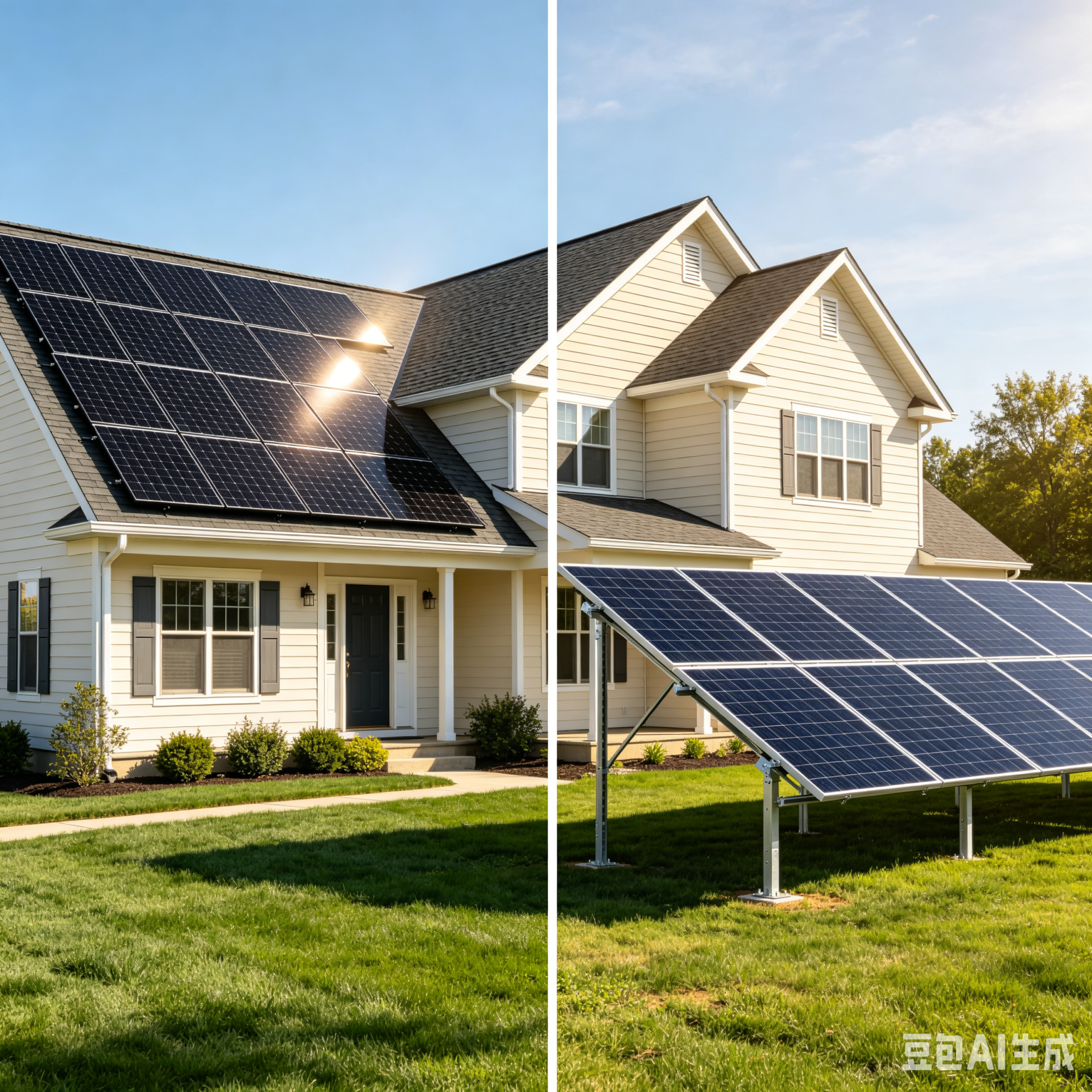
TL;DR: Roof-mounted solar is usually the cheaper, space-saving default for homes, while ground-mounted arrays suit properties with spare land and deliver easier maintenance, perfect orientation, and simple expansion. Expect ground mounts to add roughly $2,000-$6,000 on a typical home system. Choose based on your roof condition, available land, and long-term plans.
When you decide to go solar, one of the first questions is where to put the panels. Most homeowners picture them on the roof, but a ground-mounted array is a strong alternative for many properties. Here’s how the two compare so you can pick what fits your home best.
Roof-Mounted Solar Panels
Roof-mounted panels sit directly on your existing roof, using space that would otherwise go unused. This is the most common setup for a reason: it needs no extra land, keeps your yard clear, and usually costs less to install.
Pros
- No additional land required
- Lower installation cost than ground systems
- Less visible impact if you have limited yard space
- Keeps ground area free for other uses
Cons
- Limited to your roof’s direction and tilt
- Maintenance and cleaning are harder at height
- Panels must be removed if the roof needs replacing
- Older roofs may need repair first
Ground-Mounted Solar Panels
Ground-mounted systems are installed on racks in your yard, often on open ground that gets full sun. They offer flexibility that roofs simply can’t match.
Pros
- Perfect orientation and tilt for your location
- Much easier to clean and maintain
- Simple to expand later with more panels
- No roof penetrations, so no leak risk
- Better airflow keeps panels cooler in summer
Cons
- Requires usable land on your property
- Higher upfront cost for racking and trenching
- More visible and may need local permits
- Can be affected by ground-level shading and debris
Cost Comparison
A typical rooftop system costs about $2.50-$3.50 per watt before incentives. Ground-mounted systems generally run higher because of the extra racking structure and underground wiring, adding roughly $2,000-$6,000 to a standard 5-8kW home installation.
That extra cost can pay off if your roof is old, poorly oriented, or heavily shaded, since a ground array can produce noticeably more energy.
Which Should You Choose?
Go with roof-mounted if:
- You have a solid roof in good condition
- Your roof faces a good direction with full sun
- You have limited yard space
- You want the lowest upfront cost
Go with ground-mounted if:
- You have spare land with strong sun exposure
- Your roof is old, shaded, or badly oriented
- You want easy cleaning and future expansion
- You plan to stay in the home long term
Conclusion
For most homeowners, a roof system on a healthy, sun-facing roof is the practical choice. But if your roof is a poor fit or you own land that gets better sun, a ground-mounted array can outperform it for years. Compare both quotes for your specific property before deciding.
FAQ
Are ground-mounted solar panels more expensive?
Yes. Ground systems typically add roughly $2,000-$6,000 over a roof install because of the racking structure and trenching for underground wiring.
Do ground-mounted panels produce more power?
Often yes, since they can face the ideal direction at the perfect tilt, with better airflow and no roof shading or roof-angle limits.
Which lasts longer: roof or ground-mounted solar?
The panels themselves last the same 25-30 years. Ground systems avoid roof penetrations and are easier to maintain, which can protect both your roof and your panels.
Do I need a permit for ground-mounted solar?
Usually yes. Ground arrays are treated like structures in many areas, so check local zoning and permit rules before installing.
Can I add panels to a ground system later?
Yes. Expansion is much simpler with ground mounting, since there’s no roof space limit and access is easy.
Related: Solar Panel Installation Process – What to Expect Step by Step