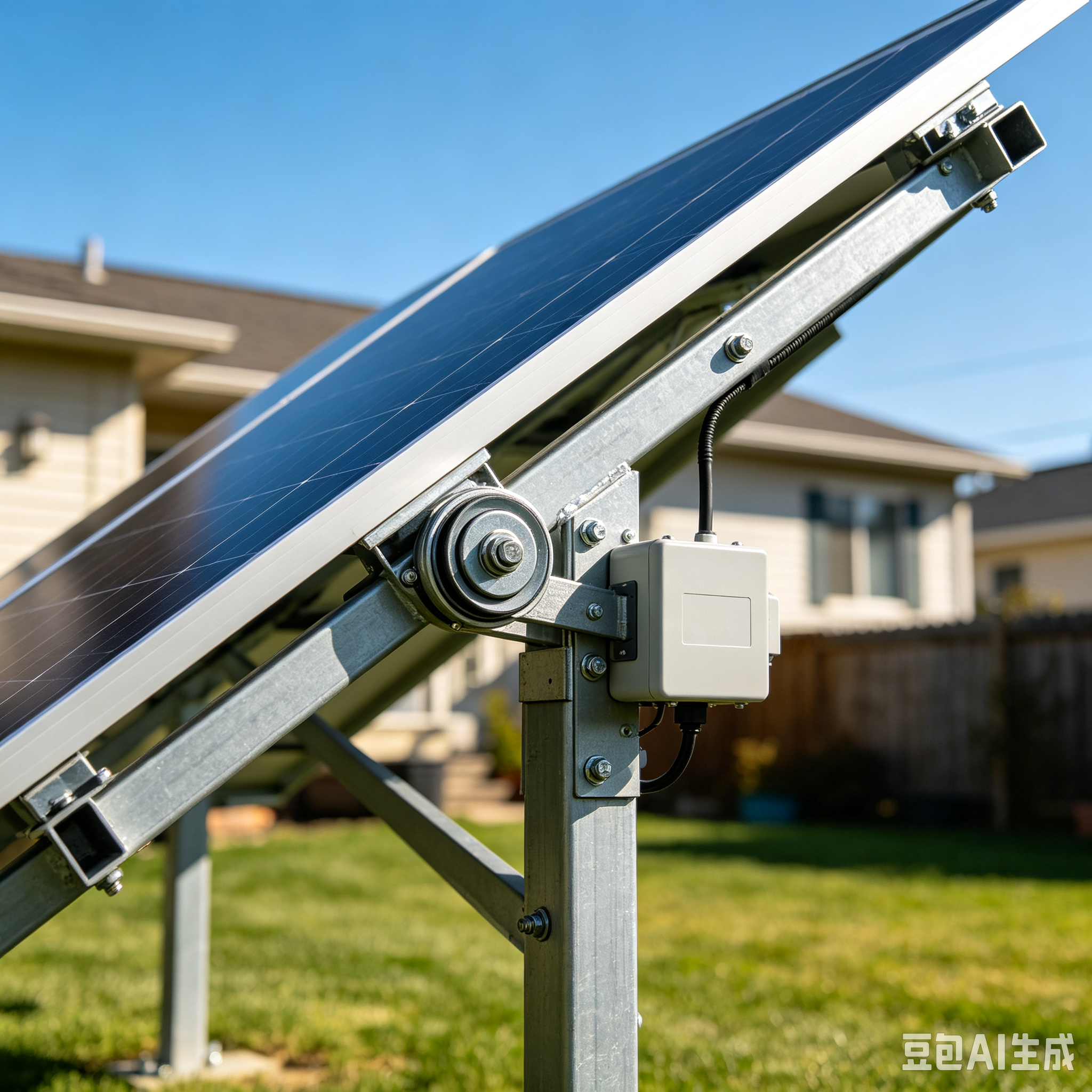
TL;DR: Solar trackers tilt panels to follow the sun and can boost output by 10-25% (single-axis) or more, but they cost thousands extra, add moving parts, and are rarely used on rooftops. For most homeowners, a fixed array at the right angle — or simple seasonal tilt adjustments — delivers better value. Trackers mainly make sense for large ground systems with plenty of land.
Solar trackers sound like an obvious win: panels that follow the sun all day should clearly generate more power than fixed ones. They do — but the extra energy comes with extra cost and complexity. Here’s what you need to know before deciding if a tracker is worth it for your home.
What Is a Solar Tracker?
A solar tracker is a mounting system that rotates your panels to follow the sun across the sky. Single-axis trackers move panels from east to west during the day. Dual-axis trackers also adjust the tilt to match the sun’s height through the seasons.
How Much More Power Do Trackers Produce?
Depending on your location, a single-axis tracker typically boosts annual output by 10-25% compared with a fixed array. Dual-axis trackers can add a bit more, but the gain over single-axis is usually small for most climates.
Those gains matter most on long summer days and in sunny regions. In cloudy or northern areas, the extra production shrinks, making trackers harder to justify.
The Downsides of Trackers
- Higher cost: Trackers can add thousands of dollars to a system, including extra equipment and installation.
- Moving parts: Motors, gears, and sensors can fail and need maintenance over the system’s 25-30 year life.
- More land: Tracked panels need extra spacing so they don’t shade each other, requiring more open ground.
- Rooftop limits: Trackers are rarely practical on sloped residential roofs.
- Wind risk: Larger moving structures can be more vulnerable in storms unless built to handle it.
When Trackers Actually Make Sense
Trackers shine in specific situations: large ground-mounted systems on open land, off-grid setups where every watt counts, or locations with very high electricity rates. Utility-scale farms use them because space is cheap and output is king.
Cheaper Alternatives That Capture Most of the Benefit
Most homes get 90% or more of a tracker’s benefit for a fraction of the cost:
- Set a fixed tilt close to your latitude
- Manually adjust the tilt twice a year if your mount allows it
- Face panels in the optimal direction for your hemisphere
- Trim trees and avoid shading instead of chasing the sun
Conclusion
Solar trackers work, but for most homeowners they cost more than the extra electricity is worth. Unless you have open land and high power needs, invest in a well-placed fixed system first. If you really want more output later, adding a few extra fixed panels is usually a smarter buy than a tracker.
FAQ
How much more power does a solar tracker produce?
A single-axis tracker typically boosts output by 10-25% over a fixed array. Dual-axis trackers add only a little more in most climates.
Can I put a solar tracker on my roof?
Rarely. Trackers need flat, open ground and extra spacing, so they aren’t practical for sloped residential roofs.
Are solar trackers worth it for homes?
Usually not. The extra cost, moving parts, and maintenance outweigh the output gain for most homeowners. A well-placed fixed system gives better value.
What maintenance do solar trackers need?
Trackers have motors, gears, and sensors that can fail, so they need periodic inspection and occasional repairs over their lifetime.
Do trackers work well in cloudy climates?
Less so. The output boost is smaller with less direct sun, which makes trackers harder to justify in cloudy or northern regions.
Related: Solar Panel Orientation and Tilt – How to Maximize Energy Output