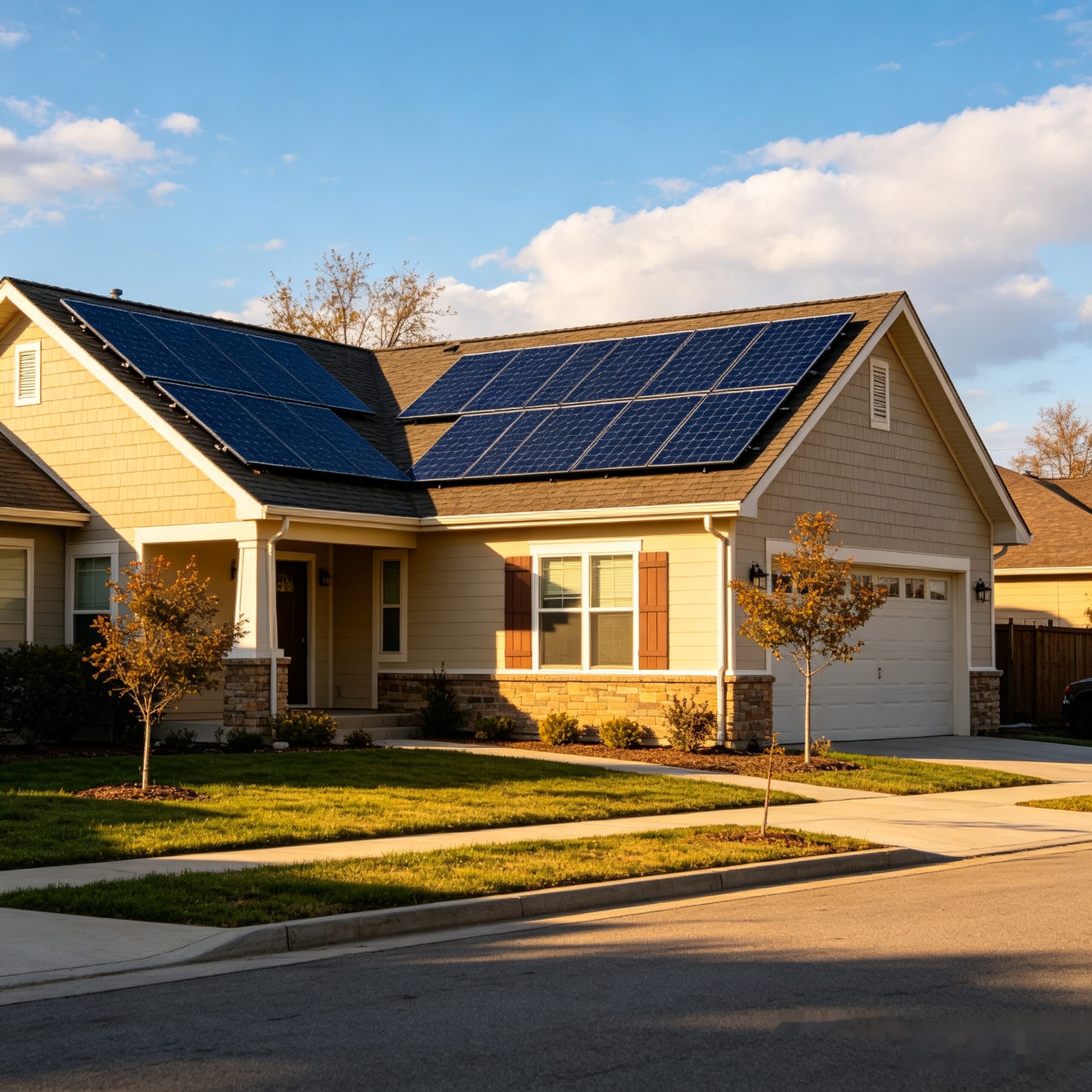
TL;DR: Microinverters vs string inverters comes down to shade, roof layout and budget. String inverters are cheaper and suit simple, shade-free roofs, but one shaded panel drags down the whole string. Microinverters cost more, yet each panel works independently – ideal for partial shade, multi-slope roofs, and easy expansion.
The inverter sits among the most critical components in any solar setup. It takes direct current generated by solar panels and turns it into alternating current that household appliances can run on. Homeowners generally have two main options: string inverters and microinverters. Below is a clear side-by-side comparison to help you decide.
What Is a String Inverter?
A string inverter works as one central unit linked to several solar panels wired together in a series, known as a string. This is the older, widely used inverter design. These units are usually mounted on an exterior wall close to your main electrical board.
Pros: More budget-friendly, straightforward to maintain, and simple to fix when issues appear.
Cons: Shading on just one panel drags down power production for every panel on the same string.
What Is a Microinverter?
Microinverters are tiny devices fitted directly underneath each solar panel. Every panel runs separately from the rest. If one panel gets blocked by shade, its performance drop does not spread to the whole array. Microinverters attach to the roof, right beside each panel.
Pros: Independent panel operation, ideal for roofs that receive partial shade, and supports tracking energy output for every single panel.
Cons: Bigger initial expense, more separate parts that might break over time, and less convenient to reach for repairs.
Microinverters vs String Inverters: Quick Comparison
String Inverter
- Cost: Lower ($1,500-$2,500 for a standard system)
- Efficiency: Strong performance without shade
- Shading impact: One shaded panel lowers output for the entire string
- Monitoring: Tracks only total system production
- Lifespan: 10-15 years
- Best suited for: Simple roofs with no shading
Microinverter
- Cost: Higher ($3,000-$5,000 for a standard system)
- Efficiency: Maintains solid output even with partial shade
- Shading impact: Only the shaded panel loses power
- Monitoring: Individual data for every panel
- Lifespan: 20-25 years
- Best suited for: Irregular roof layouts, partially shaded areas, future system expansion
How to Pick the Right Inverter
Go with a string inverter if:
- No parts of your roof fall into shade during daylight hours
- All panels face the same direction on a simple roof
- You hope to keep initial costs down
- The inverter location will be easy to reach for later maintenance
Choose microinverters if:
- Tree branches, chimneys or other objects create regular partial shade
- Your roof has multiple slopes and different panel orientations
- You intend to add more panels to the system in the future
- You want to view detailed power data for each panel individually
Conclusion
String inverters and microinverters are both dependable solutions for solar power. String inverters deliver a cost-effective option for uncomplicated, unshaded roof installations. Microinverters perform far better on complex roofs or spaces prone to shade. Your roof layout, sunlight conditions and available budget will determine which option fits your home best.
FAQ
Which is better: a string inverter or microinverters?
It depends on your roof. String inverters are the budget-friendly pick for simple roofs with no shade. Microinverters are better for roofs with partial shade, multiple slopes, or panels facing different directions.
How long do solar inverters last?
String inverters typically last 10-15 years, while microinverters usually run 20-25 years. Most string inverters will need replacement once during a solar system’s lifetime.
Does shading affect string inverters more than microinverters?
Yes. With a string inverter, one shaded panel reduces output for every panel on that string. Microinverters isolate the loss to just the shaded panel.
Can I add more panels to my system later?
Yes, and this is easier with microinverters, since each panel is independent. Expanding a string inverter system usually means checking that the existing inverter can handle the extra capacity.
Do microinverters really cost more?
Yes. Expect roughly double the upfront cost of a string inverter for a standard system, though the gap varies by brand and system size.
Which inverter should I choose for a simple, unshaded roof?
A string inverter is the most cost-effective choice. Just make sure it is mounted somewhere easy to reach for future maintenance.
Related: How to Choose a Solar Installer – Questions to Ask Before Hiring
4 thoughts on “Microinverters vs String Inverters – Which Is Better for Your Solar System”