TL;DR: Does solar void your roof warranty? Not automatically – the panels themselves do not cancel coverage. What voids it is bad workmanship: unflashed penetrations, hardware the roof manufacturer did not approve, and cracked shingles from foot traffic. Get the paperwork and photos before the crew starts, and both warranties usually survive.
Does Solar Void Your Roof Warranty?
The honest answer is that it depends on three things: how the mounting feet are sealed, whether the hardware matches what your roof manufacturer approves, and who does the work.
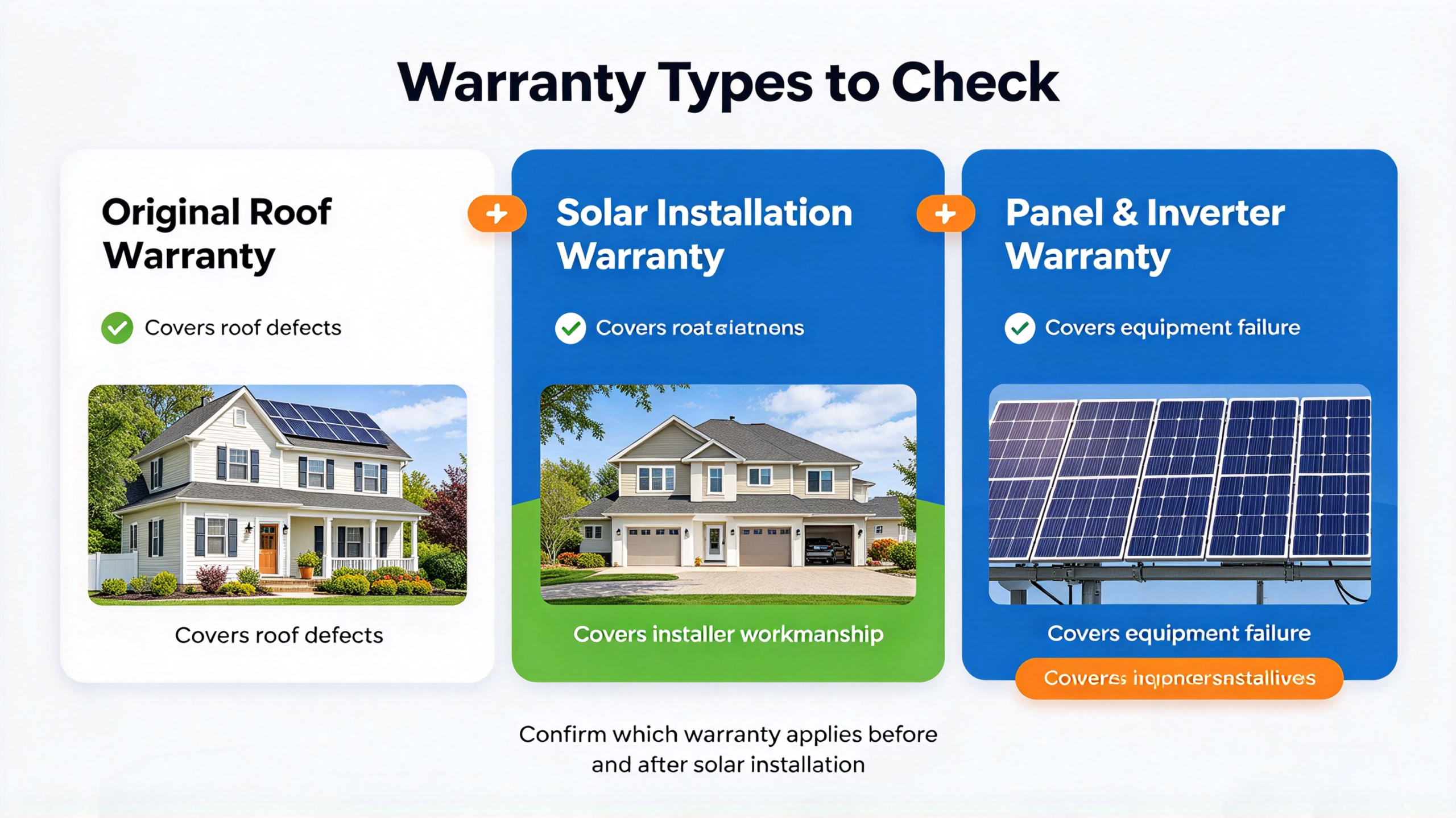
A roof warranty is not a single document. There are usually two. The manufacturer covers the shingles or tiles against defects in the material. The roofing contractor covers the workmanship of the installation. Solar involves a third party drilling into that roof, and both warranties have language about who is allowed to alter the surface.
That is the whole issue in one sentence: solar is not the problem, unapproved and poorly sealed penetrations are.
Why Roof Warranties Have Conditions
A shingle maker warranties material for decades. What it cannot control is what happens on top of the shingles after the box is opened, so the terms come with conditions. Typical exclusions include:
- Damage caused by a third party rather than the roof itself
- Alterations made by someone who is not approved by the manufacturer
- Foot traffic damage, cracked or broken shingles
- Improper ventilation or installation outside the published spec
- Repairs made with materials the manufacturer does not recognise
None of those mention solar panels. They mention bad work. That distinction is what decides most claims.
The Three Ways Solar Can Void Roof Coverage
In practice, coverage problems come from one of these:
- Penetrations sealed with caulk instead of flashing. Sealant is a backup, not the waterproofing layer. Every mounting foot should sit on a flashed base that sheds water the way the roof does.
- Hardware the roof manufacturer does not list. Some manufacturers publish approved mounting details or require a specific flashing kit. Using a generic bracket with the wrong profile creates a gap the warranty language can be read against.
- Damage during the install. Cracked shingles, torn underlayment, boots walked over and broken. None of it leaks on day one, which is exactly why it goes unnoticed.
A fourth situation is worth knowing about even though it is not the installer’s fault: later roof work. If the roof has to be repaired or replaced, the array has to come off and go back on, and a botched re-install can undo a clean original job. That process has its own cost, covered in our guide to solar detach and reset.
What A Good Installer Does Differently
You can tell a careful crew from a fast one before anything is drilled:
- They photograph the roof before, during and after
- They lift the shingle course and flash under it, rather than running a bead of sealant over a bolt
- They use the mounting system the roof manufacturer recognises for that surface
- They walk on the roof with care and replace any cracked shingle they cause
- They give you the penetration warranty in writing, with a duration and a phone number
If a leak does appear later, the presence or absence of that documentation decides whether you get a repair or an argument. It is also worth reading up on whether solar panels cause roof leaks, because most reported leaks trace back to a specific detail that was skipped.
What To Ask Before You Sign
- Which mounting system will you use, and is it approved for my exact roof material?
- Are you a certified installer for my roof manufacturer?
- How are the penetrations sealed – flashed, or sealant only?
- What is the workmanship warranty, how long is it, and is it transferable if I sell?
- Is there a separate penetration warranty, and does it cover labour?
- If a leak appears in year seven, who do I call and who pays?
- Will you document the roof condition before and after the install?
- If I replace the roof later, do you do the detach and reset, and what does it cost?
Write the answers down. A verbal reassurance is worth nothing in year seven.
How To Protect Both Warranties
- Photograph the roof yourself the day before installation
- Ask for the roof manufacturer’s warranty terms and the installer’s warranty in writing
- Keep the permit, inspection records and system paperwork in one folder
- Do not apply your own sealant to a suspicious spot – it can complicate a workmanship claim
- Keep the array untouched by anyone but the installer or a certified contractor
- Register the roof warranty if the manufacturer requires it
Coverage terms vary by manufacturer and by installer, and they change. Confirm the current wording on your own documents rather than relying on what a salesperson said verbally.
If Your Roof Is Already Old
The most common warranty regret has nothing to do with workmanship. It is installing on a roof that had five years left. Then the roof needs replacing, the array has to be removed and re-installed, and suddenly the solar project has a second bill nobody planned for.
There is a simple test for this, based on the age of the roof relative to the life of the system you are buying. Our guide to whether to replace the roof before solar walks through it in a couple of minutes.
What Happens When Something Does Go Wrong
Start with the solar installer, not the roof manufacturer. The manufacturer will almost always point to the alteration, while the installer carries the workmanship warranty that covers the penetration itself.
Document everything: date the leak appeared, photos, and any receipts. If the installer is unresponsive and the roof manufacturer declines, the next step is usually a licensed roofing contractor who can identify whether the failure came from the solar penetration or from the roof’s own age. That report is what turns a dispute into a repair.
FAQ
Does installing solar void my roof warranty?
Not by itself. A properly flashed installation using approved hardware normally preserves coverage. What creates problems is unapproved mounting hardware or penetrations that were not sealed to the roof manufacturer’s specification.
Can I install solar on a roof that is still under warranty?
Usually yes. Most manufacturers accept penetrations when the flashing method follows their published details. Ask the solar company to confirm the method in writing before work starts.
Who pays if my roof leaks after solar is installed?
The installer’s workmanship or penetration warranty is the first place to look, and most reputable installers cover repairs for a defined period. The roof manufacturer may decline the claim if the penetration was not done to specification.
Will removing panels for a roof repair void anything?
Removal itself does not void the roof warranty, but the re-installation has to be done properly. A detach and reset done by an unqualified party is exactly the kind of alteration the warranty language excludes.
Is a penetration warranty the same as a workmanship warranty?
No. Workmanship covers how the system was installed overall. Penetration warranties are usually more specific, often lasting 10-25 years, and sometimes extend to labour rather than parts alone.
Related: Solar Panel Warranties Explained – What’s Covered and For How Long