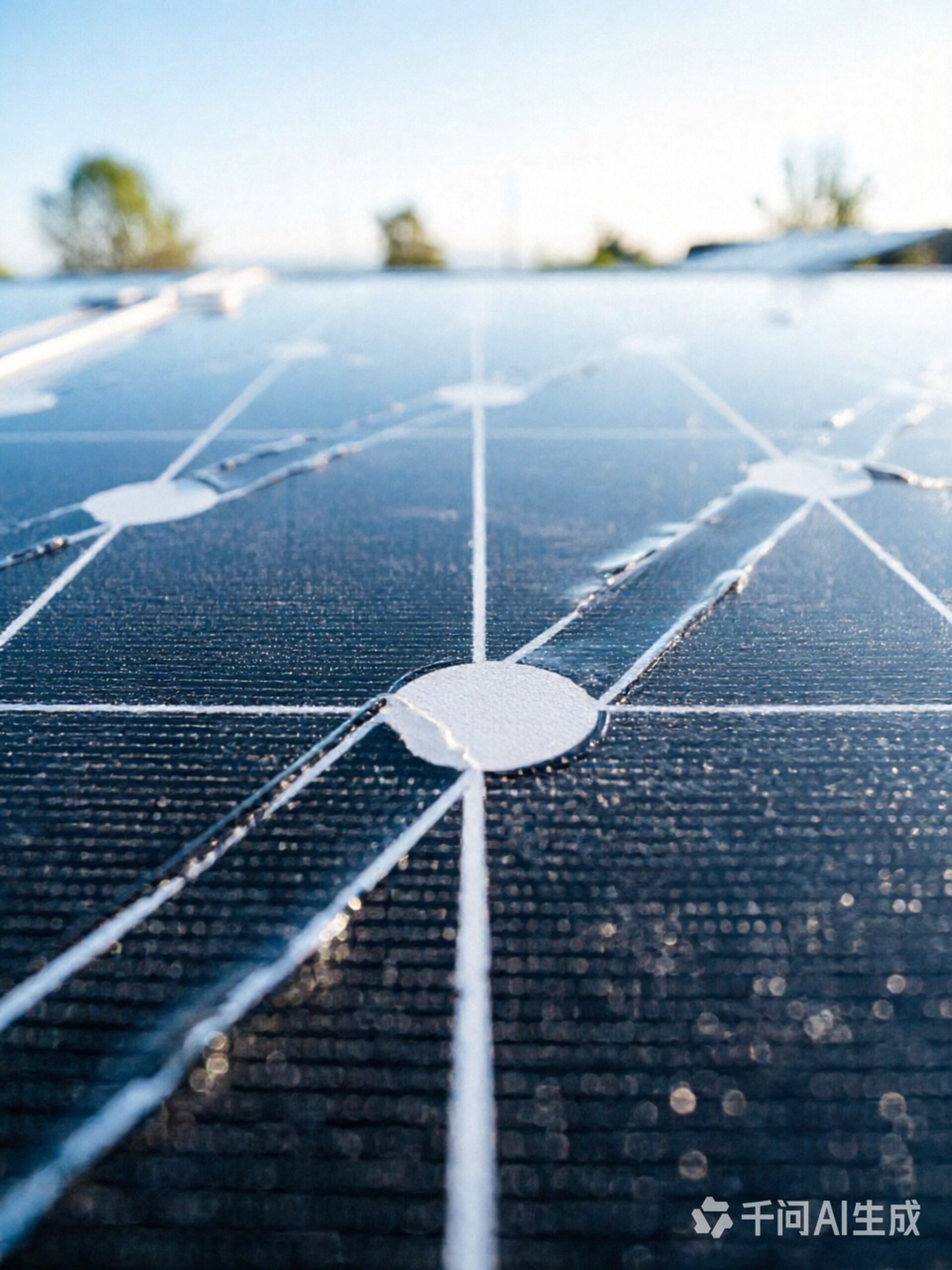
TL;DR: Solar panel cleaning is mostly water, a soft tool and the right timing. Rinse the glass early in the morning when it is cool, use a garden hose and a microfiber brush, and never use a pressure washer. Most homes need a wash once or twice a year; visible dust, pollen or bird droppings can cost 5-15% of output, while a light film usually costs only 1-3%.
Rain helps, but it does not keep glass clean. Light rain can turn dust into muddy spots, and bird droppings can stay stuck for months. The goal is not a showroom finish. It is to remove anything that blocks light without scratching the glass, loosening a seal or putting you on a wet roof.
Why Solar Panel Cleaning Matters
A solar panel is a sheet of glass over silicon cells. Anything on the glass reduces the light that reaches those cells. Dust, pollen, agricultural spray, wildfire ash, salt and bird droppings all do the same basic thing: they cast a shadow. A thin, even film is a small loss. A thick patch or a line of droppings can be much worse because the cells under it are working harder than their neighbours.
The effect is not always obvious on the bill. A 2% loss on a 7 kW system is easy to miss. A 10% loss after a dusty summer is easier to see when you compare production with the same month last year. That is why cleaning should be based on visible condition and monitoring data, not on a fixed calendar alone. If you want the wider maintenance picture, see solar panel maintenance tips for beginners.
How Often Should You Clean Solar Panels?
Most homes in a normal suburban environment need one or two cleanings a year. A rainy climate may need less. A dry, dusty or agricultural area may need quarterly rinses during the dirty season. The table below is a starting point, not a rule.
| Situation | Typical schedule | What to watch for |
|---|---|---|
| Normal suburban roof | 1-2 times a year | A visible grey film or dull glass |
| Near fields, construction or unpaved roads | Every 3 months in the dusty season | Brown dust after wind or earthworks |
| Under trees or heavy pollen | After pollen season, then late summer | Yellow pollen, sap or bird droppings |
| Coastal area | 2-4 times a year | Salt film and sticky residue near the frame |
| After wildfire ash or a dust storm | Once the ash has settled and the roof is safe | Dark ash, grit or a cloudy film |
| Snow country | Do not climb to chase every snowfall | Use a soft roof rake from the ground only |
Do not clean just because the calendar says so. If the glass is clear and production is normal, waiting is fine. If the panels are visibly dirty, clean them before the next billing period rather than after the dirt has baked on.
Tools That Are Safe, and Tools to Avoid
The safest kit is boring. A hose, a soft brush and a squeegee do almost all of the work. Specialised products are rarely necessary, and some of the tools sold for other outdoor jobs can damage a module.
| Safe for most panels | Why it works | Avoid |
|---|---|---|
| Garden hose with a gentle spray nozzle | Lifts loose dust without high pressure | Pressure washer or jet nozzle |
| Soft microfiber cloth or wash brush | Lifts sticky dirt without scratching | Abrasive pad, steel wool or scouring sponge |
| Long-handled squeegee | Removes water before it dries into spots | Metal scraper or ice pick |
| Mild dish soap for spot treatment | Helps lift bird droppings and sap | Bleach, solvent, acid or strong detergent |
| Deionised water for the final rinse | Reduces hard-water marks | Hot water on cold glass |
| Telescopic pole from the ground | Keeps your feet off the roof | Walking or kneeling on the panels |
A pressure washer is the most common expensive mistake. The jet can force water past the frame seal, damage the backsheet or crack a connector. A garden hose has enough pressure for normal dust. If the dirt needs more than that, use a longer soak and a soft brush, not a stronger jet.
Step-by-Step Solar Panel Cleaning
Work early in the morning or late in the afternoon, when the glass is cool and the sun is weak. Cleaning hot glass causes faster evaporation, more streaks and unnecessary thermal stress. Check the weather first; do not start if rain or lightning is close.
| Step | What to do | Why it matters |
|---|---|---|
| 1 | Inspect from the ground for cracked glass, loose cables, damaged frames or exposed wiring. | If anything looks damaged, stop and call a qualified installer or electrician. |
| 2 | Rinse the panels from the top down with a gentle hose spray. | Loose dust and grit are removed before anything touches the glass. |
| 3 | Wash with a soft brush or microfiber cloth and plain water. | This removes the film without abrasion. |
| 4 | Spot-treat bird droppings with a little mild soap and water. | Soaking softens the mess; scrubbing hard can scratch the glass. |
| 5 | Rinse thoroughly from the top down. | Soap residue attracts dust and can leave a film. |
| 6 | Pull a squeegee down each panel, or use a deionised final rinse. | Less standing water means fewer hard-water spots. |
| 7 | Record the inverter output before and after at a similar time of day. | One sunny reading is not proof; compare like with like. |
Do not open the inverter, junction box or any electrical enclosure. Do not spray directly into connectors, conduit or cable entries. If your manual calls for a specific shutdown procedure before washing, follow the manufacturer’s sequence; if you are not confident doing it, leave the electrical side alone and clean only what you can reach safely from the ground.
How Much Output Cleaning Recovers
The honest answer is: it depends on what is on the glass. A light film of dust is a small problem. Thick pollen, construction dust or a line of bird droppings can be a larger one. The ranges below are illustrative, not a promise for your system.
| Soiling | Typical output effect | Best response |
|---|---|---|
| Light dust film | About 1-3% | Wait for the normal cleaning cycle unless production drops |
| Pollen or agricultural dust | About 2-6% | Rinse after the pollen season or dusty period |
| Bird droppings | Localised hot spots; 5-15% if widespread | Soak and remove promptly, especially in hot weather |
| Construction dust or wildfire ash | About 5-15% until rinsed | Rinse after the ash settles; do not dry-scrub grit |
| Snow cover | Near 100% while covered | Do not climb; let it slide or use a soft rake from the ground |
A 10% loss on a system that produces 8,000 kWh a year is 800 kWh. At $0.20 per kWh, that is about $160 of lost value. A professional wash may cost more than that, which is why cleaning should be based on actual soiling rather than fear. The break-even maths is covered in solar panel cleaning cost.
Winter Cleaning and Snow
Do not pour hot water on cold panels. The temperature shock can crack the glass. Do not use an ice pick, a metal shovel or a hard scraper. Do not walk on the roof to chase a light dusting of snow; the fall risk is greater than the output loss.
If snow is deep and the roof is safe to reach from the ground, use a soft roof rake with a long handle. Work carefully so you do not pull on cables or hit the panel frame. In most cases, the sun and the slope will clear the array faster than a risky DIY job. For the seasonal maintenance picture, see solar panel maintenance in winter.
When to Hire a Professional
Hire help when the job involves height, fragile roof material, heavy soiling or any sign of electrical damage. A professional cleaner should carry insurance, use deionised water where needed and know how to work around the array without standing on it.
| Situation | DIY or professional? | Reason |
|---|---|---|
| Single-storey roof, safe access, light dust | DIY from the ground | Low risk and simple tools |
| Two-storey or steep roof | Professional | Ladder and fall risk are the main danger |
| Fragile tile or fragile roof covering | Professional | Walking on the roof can cause damage |
| Heavy bird droppings or cement dust | Professional or specialist | Needs controlled soaking and safe access |
| Cracked glass, loose cable or damaged frame | Stop and call an electrician or installer | Water plus damaged electrical parts is unsafe |
| Hard-water stains across the array | Professional with filtered water | A final rinse with the right water is faster and cleaner |
Mistakes That Cause Damage
- Using a pressure washer. It can force water past seals and damage connectors.
- Cleaning hot glass at midday. Water evaporates before it can be squeegeed, leaving spots and stress.
- Scrubbing dry dirt. Grit acts like sandpaper; rinse first.
- Using abrasive pads or metal tools. They can scratch the anti-reflective coating.
- Letting soap dry on the glass. Rinse thoroughly and work in sections.
- Walking on the panels. Modules are not designed to support a person’s weight.
- Spraying electrical boxes. Keep water away from inverters, junction boxes and cable entries.
- Assuming rain is enough. Rain can leave muddy spots and does not remove stuck droppings.
Conclusion
Solar panel cleaning is a simple job when you keep it simple: cool glass, a gentle rinse, a soft brush and a clean final rinse. Clean once or twice a year, or more often in dusty conditions, and let visible soiling and production data tell you when. Never trade a small output gain for a fall, a scratched panel or a damaged seal. If the roof is steep, the array is high or anything looks damaged, hire a professional.
FAQ
How often should I clean my solar panels?
Most homes need one or two cleanings a year. Clean every three months in a dusty or agricultural area, and after heavy pollen, construction dust or wildfire ash.
Does solar panel cleaning really increase output?
Yes, when the glass is visibly dirty. Light dust may cost only 1-3%, but thick pollen or bird droppings can cost 5-15% or more in the affected area. Clean glass cannot recover losses caused by shade or equipment faults.
Can I use a pressure washer on solar panels?
No. A pressure washer can force water past the frame seal and damage connectors or the backsheet. Use a garden hose with a gentle spray instead.
What soap should I use?
Plain water handles most dust. For bird droppings or sap, use a small amount of mild dish soap, then rinse thoroughly. Avoid bleach, solvents, acids and abrasive cleaners.
Can I clean solar panels in direct sun?
It is better to clean early in the morning or late in the afternoon when the glass is cool. Hot glass dries quickly, which causes streaks, and cold water on hot glass adds unnecessary thermal stress.
Do I need to turn off the solar system?
Follow the manufacturer’s manual and your installer’s instructions. Do not open electrical enclosures yourself. If you are not confident with the shutdown procedure, stay away from the electrical side and clean only from a safe position.
Can rain clean my panels?
Rain removes some loose dust, but it can also leave muddy spots and does not dissolve bird droppings. It reduces the need for cleaning; it does not replace it.
How do I remove bird droppings?
Soak the spot with water, then wipe gently with a soft microfiber cloth and a little mild soap. Do not scrape or scrub hard, especially on hot glass.
How do I remove snow from solar panels?
Use a soft roof rake from the ground if it is safe to reach. Never pour hot water on cold glass, use an ice pick or walk on the roof. In most cases, waiting for the sun is safer.
When should I hire a professional cleaner?
Hire a professional for a two-storey or steep roof, fragile tiles, heavy soiling or hard-water stains. Stop and call an electrician if you see cracked glass, loose cables or damaged electrical parts.
Will cleaning scratch the glass?
Not if you rinse off grit first and use a soft brush or microfiber cloth. Abrasive pads, metal scrapers and dry scrubbing are the usual causes of scratches.
Is solar panel cleaning worth it?
It is worth it when the glass is visibly dirty or production has dropped. For light dust, the gain may be too small to justify a professional visit. Compare the expected recovery with the quoted cost.
Related: Solar Panel Cleaning Cost