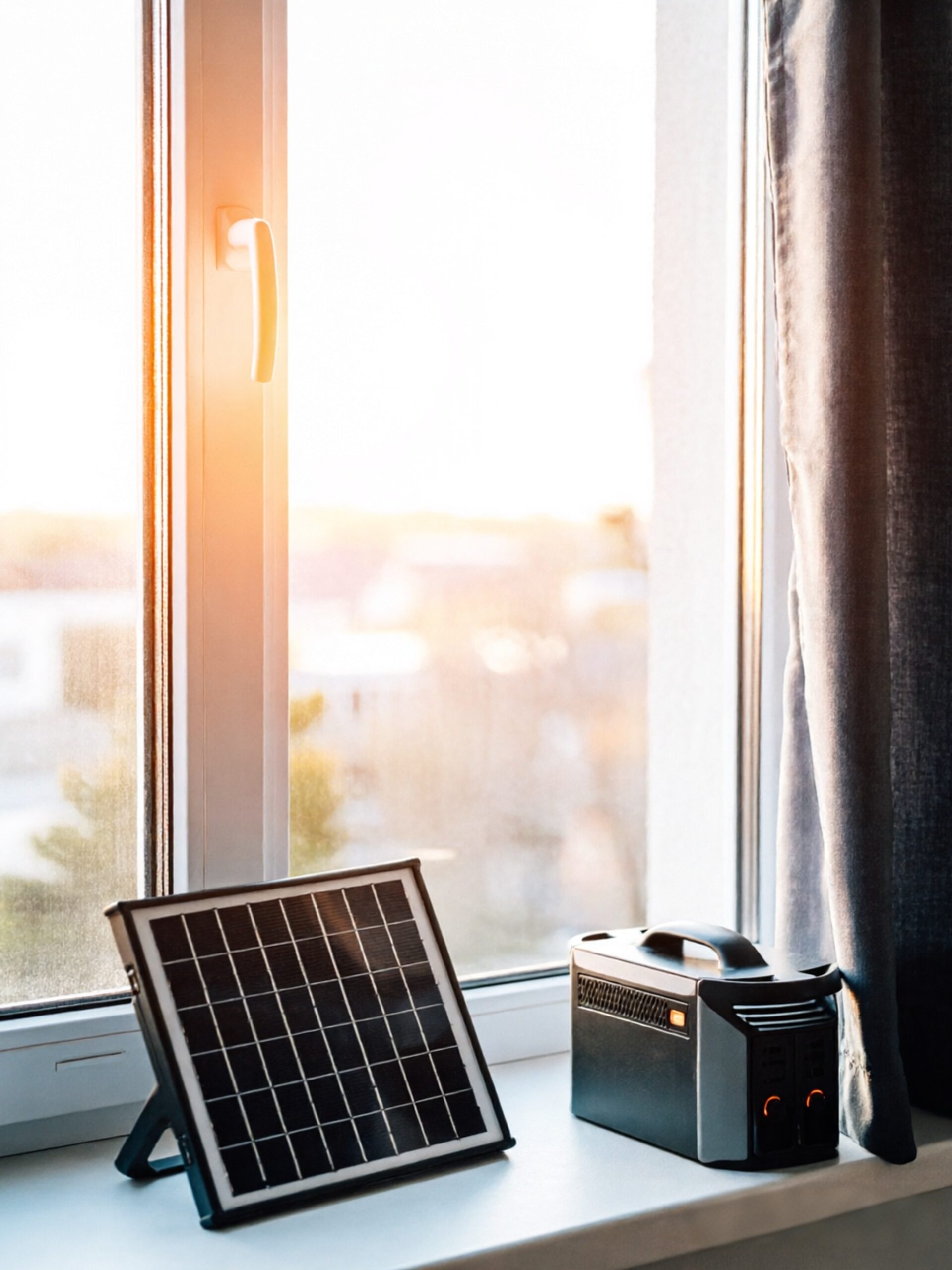
TL;DR: Solar panel maintenance tips, in one line: it is mostly watching, not doing. Open the monitoring app once a month, look at the array from the ground after any storm, keep the inverter area clear, and wash the panels about twice a year. Panels have no moving parts and no required service visits, so a realistic budget averaged over 25 years is $150-$300 a year – and most of it arrives in the one year the inverter is replaced.
Quick Answer
These solar panel maintenance tips are the short version: check the monitoring app once a month, look at the array from the ground after storms, keep the inverter ventilated, and wash the glass once or twice a year. A normal home system does not need a paid annual service.
| Question | Short answer | What to do next |
|---|---|---|
| How often should I check? | Five minutes a month, plus a look after any storm. | Compare the same month year over year. |
| How often should I clean? | Once or twice a year for most homes. | Clean quarterly in dust, pollen or coastal salt. |
| Is an annual service required? | No for a normal home system. | Keep monitoring data and inspect after severe weather. |
| What does it cost? | Under $200 a year for most homes in years 1-10. | Average about $150-$300 a year over 25 years. |
| When should I call a professional? | Steep or high roof, cracked glass, repeated fault codes, battery or commercial system. | Do not work on the DC side yourself. |
What Solar Panel Maintenance Actually Involves
A home solar system has only three things that can ask for attention: the glass on the surface, the wiring and inverter at the end of the circuit, and whatever grows above or falls onto the array. None of them has a moving part.
That is why there is no annual service schedule to keep. Manufacturers do not require one, and skipping a paid maintenance contract does not affect your warranty. What the system needs instead is a habit – look at the numbers, look at the array, and act when something changes.
The Maintenance Schedule at a Glance
| When | What you actually do | Who | Typical cost |
|---|---|---|---|
| Once a month, five minutes | Compare this month’s production with the same month last year; look at the array from the ground; check the inverter has clear airflow | You | $0 |
| After any storm or hailstorm | Visual check for cracked glass, lifted racking, or debris sitting on the surface | You | $0 |
| Twice a year | Wash the glass if it looks filmed or dull | You, or a cleaner | $0-$500 |
| Once a year | Check the mounting bolts, the rail clamps and the powder coating; look for rust at the joints | You | $0 |
| Once, around year 10-15 | Replace the string inverter | Installer | $1,000-$2,500 |
| Across 25 years | All of the above, averaged out | – | $150-$300 per year |
That is the whole schedule. Everything below explains the reasoning behind each line.
Is maintenance worth paying for? A 5% output loss on an 8,000 kWh system is 400 kWh a year. At $0.20 per kWh, that is about $80. Use the solar payback calculation guide to see how soiling, a fault or a rate change affects your break-even point.
The Monthly Check: Five Minutes, From the Ground
Once a month, four things:
- Compare production with the same month last year. A slow decline is normal. A sudden drop means something happened. System monitoring is where that comparison lives.
- Look at the array from ground level. Check for cracked glass, dark patches, or anything resting on the surface. If you do find a crack, repair or replace covers how that decision usually goes.
- Look at what is growing near the panels. Trees add shade every year, and shade on one panel drags down the whole string.
- Check around the inverter. It needs airflow, and nothing should be stacked against it.
For most homes that is the entire routine. It costs nothing and it catches nearly everything early.
How Often Do the Panels Need Cleaning?
Twice a year is the usual answer, and in many climates even that is optional. Rain handles most of it.
Cleaning earns its place if you live in a dusty area, near construction, under heavy pollen, or through a long dry season. A panel holding a visible film of dust can gain 5-15% output after a wash. A panel that already looks clean rarely gains anything you would notice.
Two rules matter more than the schedule: a soft sponge or microfiber cloth with plain water, and never a pressure washer. High-pressure water works into the frame seals, and the damage shows up months later as moisture inside the panel. How often panels actually need cleaning breaks this down by climate.
Cleaning Frequency by Situation
The honest answer to “how often” depends on what lands on the glass, not on the calendar.
| Your situation | How often to wash |
|---|---|
| Rainy climate, steep roof (over 30°), no dust | Rain usually does it. Wash only when the glass looks visibly filmed |
| Typical suburban roof, moderate pollen | Twice a year, early summer and autumn |
| Heavy pollen season (pine, oak, eucalyptus) | Once after the pollen drops, then again in autumn |
| Dust, gravel roads, farmland, or construction next door | Every three months |
| Flat roof or balcony with vents nearby | On a schedule – the film is oily, and rain does not clear it |
| Coastal salt spray | Every two to three months, plain water rinse only |
The One Component With a Real Service Life
The inverter is the only part of a home system that wears out on a predictable clock. String inverters typically last 10-15 years, and replacing one runs roughly $1,000-$2,500 installed. Microinverters last longer but cost $150-$400 each when one fails.
Nothing needs doing to it in the meantime. Setting aside $100-$200 a year from installation day is what turns the eventual replacement into a planned cost instead of an emergency. Inverter replacement cost has current pricing.
Small Rooftop Systems and Apartments
Small arrays need less of everything, with one exception: they are easier to shade by accident. On a four to six panel system, a single vent pipe, chimney, or neighbouring roof can shade a panel that carries a large share of total output.
So on small systems the monthly look matters more than the cleaning. If production drops on a clear day, check the shading before assuming the panels are dirty.
Flat roofs and balconies have the opposite problem. Vents and kitchen exhaust leave an oily film rather than a dusty one, and rain does not clear it as well. Those panels are worth a wash on a schedule rather than on sight.
If you are dealing with a balcony or apartment array, the space and mounting constraints are different. See small solar panels for balconies and solar generators for apartments before buying more equipment.
Do You Need a Professional Maintenance Service?
For a normal residential roof, no. There is no manufacturer-required service, and skipping a paid contract does not affect your warranty. The routine in this article is five minutes a month and a wash or two a year, and most owners do it themselves.
There are four situations where paying someone is the right call:
- The array is on a roof you should not be walking on – steep pitch, three storeys, fragile tiles, or a route across a skylight
- You have a battery, or the inverter is showing fault codes you cannot interpret
- The system is commercial, or large enough that a fault has a production cost attached
- You cannot see the array from the ground at all, so the monthly visual check is impossible
One warning about the way these services are sold. Output is set by the hardware, the weather and the shade – not by servicing. If a company offers a contract that promises to raise your production, it is selling something that does not exist. What a paid visit genuinely buys is inspection, cleaning and a written record.
If you do buy visits, buy them as a check rather than a tune-up: one inspection a year, a short report, and photographs of anything they flag.
Commercial and Farm Systems: What Changes
Everything above still applies, but three things change at commercial scale.
- The loss is bigger. One failed or shaded string on a 200 kW array is a real production cost, so monitoring alarms matter far more than they do on a house
- Central and three-phase inverters have moving air. Fans, filters and cooling paths do need an annual clean and a filter change, and keeping to it is usually a condition of the warranty
- Cable, conduit and earthing get a proper annual inspection. It is where most commercial faults start
Cleaning also moves onto a schedule rather than on sight. On farmland, near gravel, or under dust, quarterly cleaning is normal – and the output recovered between washes is usually worth more than the cleaning bill. On commercial roofs, keep a written record of every visit, because insurers and warranty claims ask for it.
One further difference: somebody has to get up there. Plan the access, the fall protection and the roof loading before anyone does.
How to Tell Dirt from a Real Fault
A drop in output has four common causes, and they look different in the data. The tell is the shape of the curve, not the size of the drop. Weather is a dip that comes back. Soiling is a slope. A fault is a step.
| Symptom | Likely cause | First check | Next step |
|---|---|---|---|
| Whole array drops, then recovers | Cloud, rain or weather | Compare the same month last year | Check the monitoring trend |
| Slow decline over weeks | Dust, pollen or bird droppings | Look at the glass from the ground | Review cleaning frequency |
| Same drop at the same time every day | Shade from trees, a vent or a chimney | Check the shadow path across the day | Measure the shading |
| Sudden step change on one string | Inverter, wiring or connector fault | Read the inverter alarm or error code | Look up the error code |
| One panel much lower than its neighbours | Microcracks, a failed bypass diode or a loose connection | Use a clamp meter or multimeter safely | Test the panel or inspect for microcracks |
| Cracked glass, burn mark or loose frame | Physical damage or overheating | Stop and keep people away | Decide whether to repair or replace |
Before you book a cleaning or call an installer, look at the last thirty days of production. If the curve is a dip, wait for better weather. If it is a slope, inspect the glass. If it is a step, treat it as a fault until proven otherwise.
Things Never to Do
- Never walk or step on the panels. The glass is tempered, but the cells beneath it are thin and brittle – microcracks often start this way.
- Never use a pressure washer, an abrasive pad, or a stiff brush.
- Never finish a wash with hard water. The mineral spots left behind cut output more than the dust did.
- Never pour hot water on cold glass in winter. The shock can crack it.
- Never let an unlicensed person work on the DC side. It risks the warranty as much as your safety.
- Do not buy an annual “tune-up”. Output is set by the hardware and the weather, not by servicing.
Winter Maintenance, Short Version
Let snow melt on its own, or pull it down with a soft roof rake from the ground. Never a metal shovel, never hot water. Check the array after freeze-thaw cycles, which is when hairline cracks tend to appear. And do not clear snow purely to chase output – the production lost in a snowy week is rarely worth a trip onto the roof. Solar panel maintenance in winter covers the full version.
What It Costs
Most homes spend under $200 a year for the first decade: monitoring is free and no visits are required. Across the full 25-year life, with one inverter replacement included, a realistic average is $150-$300 a year. Annual solar maintenance cost breaks that down year by year.
| Item | Typical cost |
|---|---|
| Your own monthly check | $0 |
| DIY wash (plain water, soft brush or sponge) | $0-$20 in materials |
| Professional cleaning, per visit | $150-$500 |
| Annual service contract | Not required – only worth it if you cannot do the checks yourself |
| String inverter replacement, once in 25 years | $1,000-$2,500 installed |
| Microinverter replacement, single unit | $150-$400 each |
| Typical years 1-10, most homes | Under $200 a year |
| 25-year average, everything included | $150-$300 a year |
Want your own payback number? Use the solar payback calculator to enter your system size, cost and electricity rates.
Bottom Line
The best solar panel maintenance tips are boring: watch the data, keep the glass reasonably clean, and fix a step change before it becomes a repair. There is no annual tune-up that raises output, and no service contract that replaces a failed inverter. The work is mostly attention, and the cost is mostly one planned replacement.
FAQ
What maintenance do solar panels need?
Watching and occasional cleaning. Check the monitoring app once a month, look at the array from the ground after storms, keep the inverter ventilated, and wash the glass roughly twice a year. There is no required annual service, and nothing to lubricate or replace on a schedule.
How often do solar panels need maintenance?
A five-minute check once a month, a visual inspection after any major storm, and a wash about twice a year. Systems in dusty, agricultural, or high-pollen areas benefit from a wash every three months instead.
Do I really need to clean my solar panels?
Usually not often. Rain does most of the work. Cleaning is worth paying for where dust, pollen, or construction accumulate, or where output has visibly slipped. Professional cleaning generally runs $150-$500 depending on roof height, pitch, and system size.
Is solar panel maintenance covered by warranty?
Manufacturer warranties cover defects, not wear or accidental damage. Skipping a paid maintenance contract does not void anything, because those contracts are not required. Damage from an unlicensed repair, or from an impact such as hail, is normally not covered.
How do I know when my panels need attention?
Look for a step change rather than a slow drift. One panel running a few percent under its neighbours, a sudden drop on a clear day, a new fault code on the inverter, or visible cracks after a storm all justify a closer look. Common solar panel problems walks through what each symptom usually means.
What maintenance do solar panels need in winter?
Very little. Let snow melt, or remove it with a soft roof rake from the ground. Keep hot water and metal tools away from the glass, and check the array after freeze-thaw weather for new cracks. Snow removal that works covers the tools and the mistakes.
What are the most common solar panel maintenance problems?
Dirty glass, shade from trees, loose wiring, inverter faults, cracked glass and animal nests are common. Most are visible from the ground or show up as a change in monitoring data. Common solar panel problems explains the usual fixes.
How do I know if my panels are dirty or faulty?
Dirt usually causes a slow decline over weeks. A fault often causes a sudden step change on one string, and shade produces the same drop at the same time each day. Compare the shape of the curve, not just the total kWh.
Do solar panels need maintenance every year?
No. A normal home system needs a monthly five-minute check and a wash once or twice a year. A paid annual service is optional and is not required by most manufacturers.
How much does solar panel maintenance cost?
Most homes spend under $200 a year in the first decade. Across 25 years, including one inverter replacement, a realistic average is $150-$300 a year. A professional wash is usually $150-$500 per visit.
Related: Solar Payback Calculator
Related: Solar Panel Cleaning Cost
Related: Solar Panel Monitoring
2 thoughts on “Solar Panel Maintenance Tips: A Beginner’s Checklist for Home Systems”